
Fence, gate & outdoor work
Deck Repair
Deck repair decisions should consider the visible damage, the supporting assembly, and the reason the problem developed.
Send wide photos of the full deck and close photos of boards, rails, stairs, posts, visible framing, connections, footings, drainage, house interface, and access. Describe movement, softness, impact, water, age if known, and the result you want reviewed.
Project estimate
Request an estimate
Share the property address, project details, and useful photos.
Useful for
Loose or damaged boards, railings, stairs, visible support concerns, weathered components, and repair-versus-replacement decisions.
Key choice
Failure extent and cause, supporting condition, material match, safety-sensitive areas, access, and whether a repair remains sensible.
Send first
Property location, approximate length, gate openings, access notes, slope or grade changes, removals, and helpful photos.
Coverage
Nicholasville-centered requests plus nearby communities are reviewed from the actual property address.
See the scope
Material, transitions, access, and surrounding conditions all matter
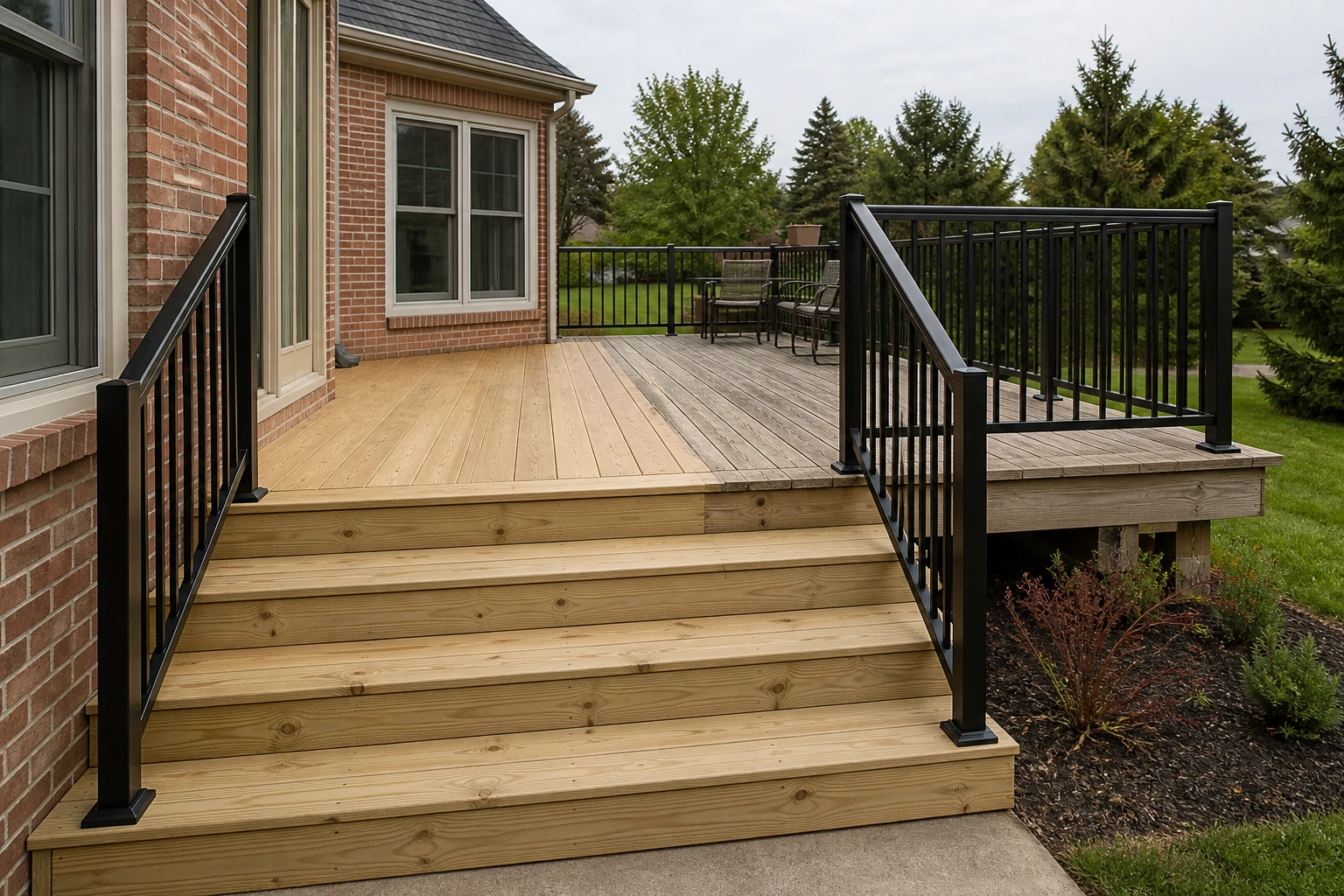
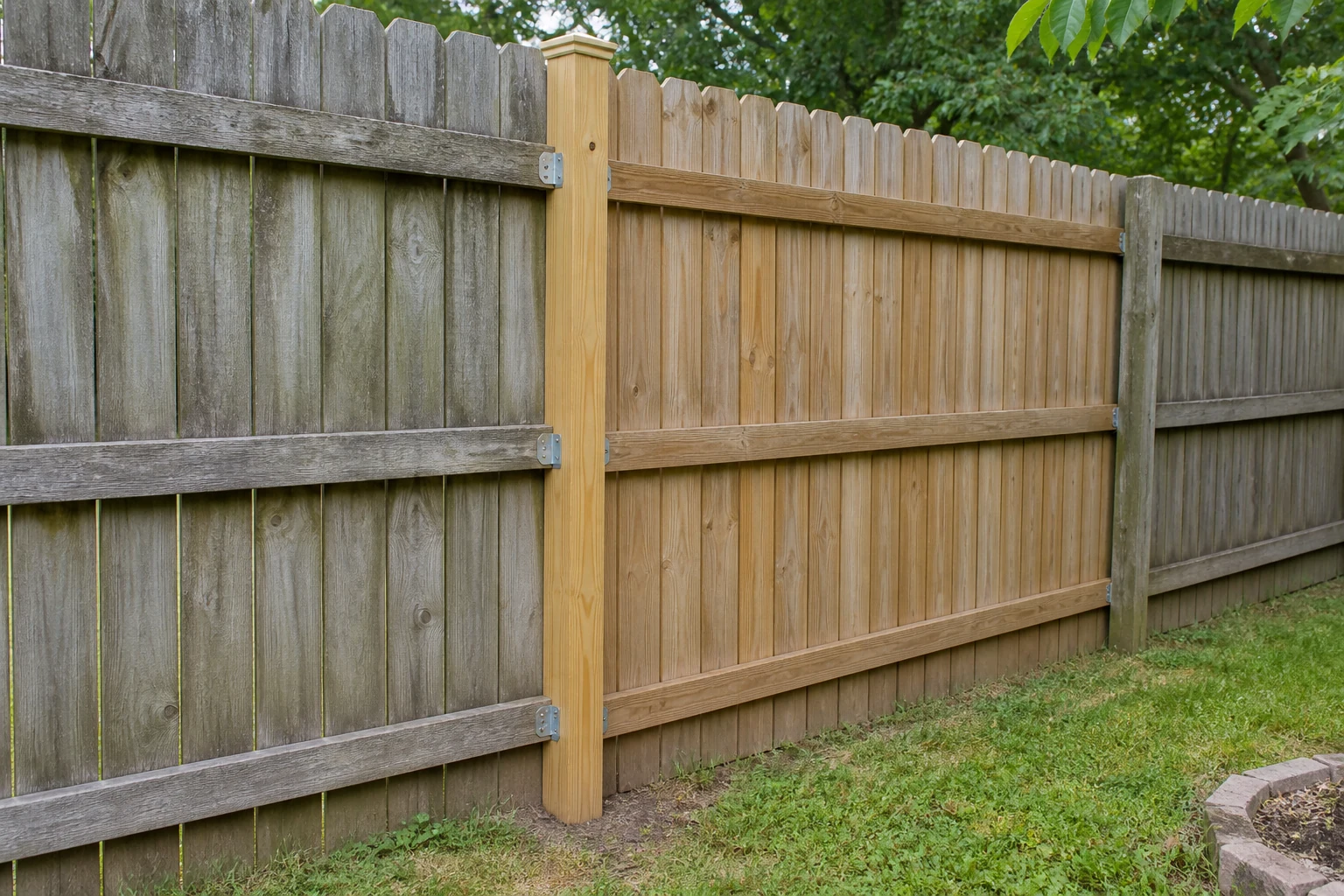
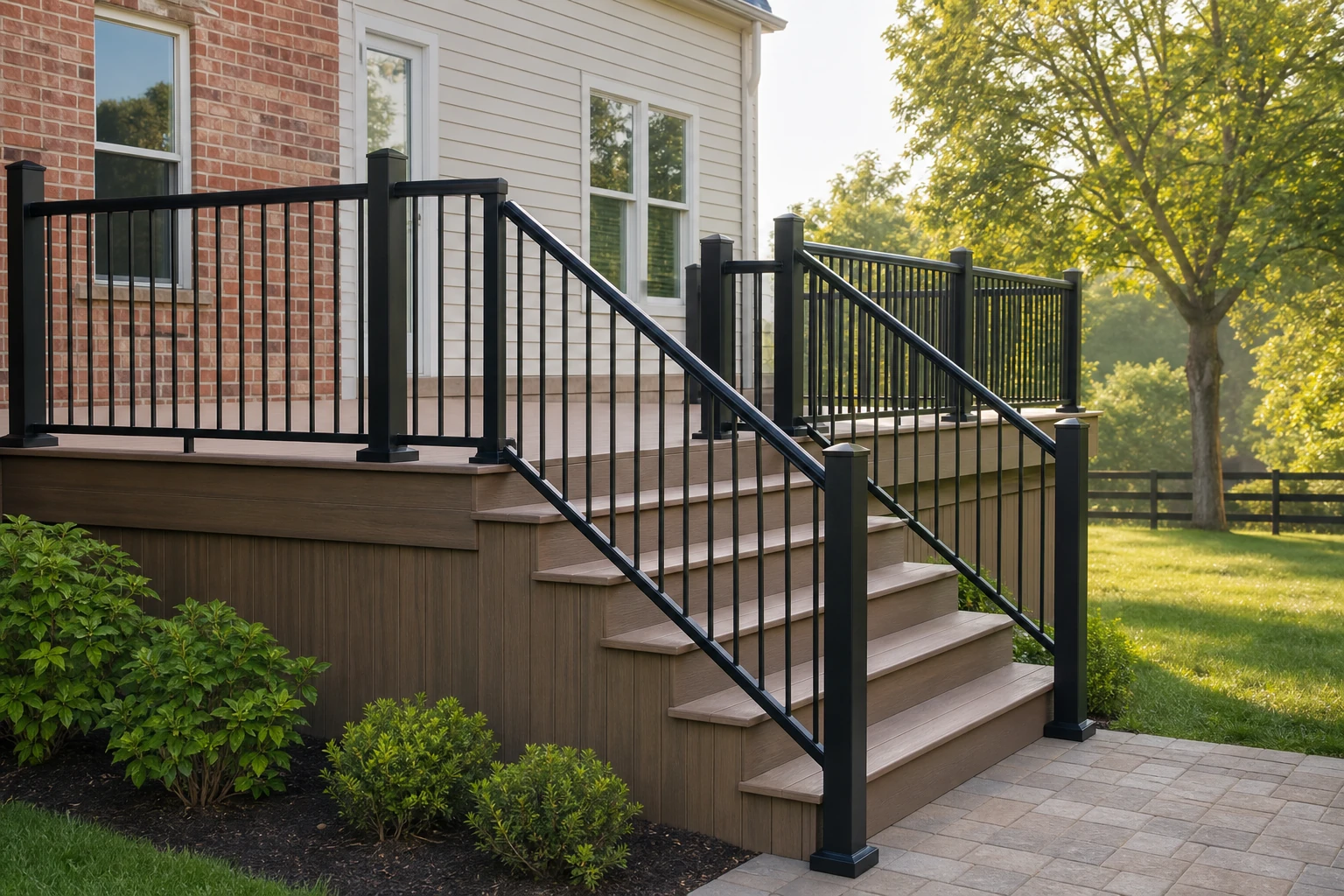
Use more than one view to compare the visible system, the openings or transitions, and the property conditions that can change the request.
Start with the outcome
What deck repair can help organize
A useful scope connects the material and layout to how the property needs to work.
Document the condition
Wide and close views help connect a loose board or rail to the surrounding structure and exposure.
Compare repair paths
Targeted repair, partial rebuild, and replacement can be considered against condition, matching, access, and future use.
Separate urgent hazards
Unsafe areas can be kept out of use while a qualified project-specific assessment is arranged.
Make the decision concrete
Where deck repair fits
Opposite sides carry comparable detail: the desired result on one side and the conditions that shape it on the other.
Visible damage may be isolated, but softness, movement, corrosion, failed connections, drainage, or concealed deterioration can extend beyond one component. A repair request should describe symptoms without assuming the structure is sound. Safety-sensitive concerns deserve prompt, qualified review.
Good fit when
- Loose or damaged boards, railings, stairs, visible support concerns, weathered components, and repair-versus-replacement decisions.
- A defined fence line, a clear use for the enclosure, and enough property detail to compare a practical scope.
- The preferred direction for failure extent and cause, supporting condition, material match, safety-sensitive areas, access, and whether a repair remains sensible. is clear.
- The request can be documented without relying on unsupported assumptions.
Website photos cannot certify structural safety or reveal concealed deterioration. Do not rely on this page to keep using an unstable deck, stair, or railing. The accepted repair scope depends on qualified inspection of accessible conditions and may change when concealed work is opened. Record the known condition and the unresolved responsibility in plain language so neither side is buried in an assumption.
Scope-changing details
- Decking, railing, stair, landing, post, beam, joist, ledger, footing, or connection concern
- Softness, movement, sag, split material, rust, water, impact, or finish failure
- Extent of matching material available and tolerance for visible variation
- Whether layout, use, size, stairs, or railing goals have changed
Compare practical directions
Deck Repair options and use cases
These are planning categories, not promises that every system or variation fits every site.
Surface repair review
Damaged decking or trim can be documented with surrounding support, moisture, fasteners, and matching needs.
Railing or stair review
Loose posts, rails, treads, stringers, landings, and connections require a complete safety-focused view.
Partial rebuild
One area may be separated only when transitions and retained structure can be clearly evaluated.
Replacement planning
Widespread deterioration or changed use may justify planning a new deck instead of repeated component repairs.
A clear path
From request to a defined deck repair scope
The same four-step rhythm keeps project details, site context, decisions, and next actions easy to follow.
Share the location
Send the property address, contact details, desired outcome, approximate dimensions, and the photos that explain the route or work area.
Show the conditions
Document grade, access, existing materials, structures, hardscape, vegetation, drainage, utilities, and every gate or transition.
Compare the scope
Review the deck repair direction, exclusions, owner responsibilities, material choices, and any information still needed.
Confirm next steps
Use the written conversation to confirm what is being considered before treating layout, material, preparation, or approvals as settled.
Prepare a useful request
Measure broadly, photograph clearly, and label uncertainty
Include these project details
A rough sketch and overlapping photos usually explain more than one close-up image.
- Keep people away from visibly unsafe or unstable areas
- Photograph the full deck plus every symptom from safe positions
- Show visible framing, connections, drainage, grade, and house interface
- Describe movement, softness, water, impact, prior repairs, and changed use

If measurements are preliminary, label them as approximate. Show endpoints, corners, gates, changes in grade, neighboring interfaces, and the route used to reach the work area. Confirm property-line, utility, HOA, city, county, permit, and code responsibilities through the appropriate current sources. Include more than one view whenever a transition or access constraint is easy to miss.
Keep planning
Related to deck repair
Choose the next page that best matches the decision you are working through.
Common questions
Deck Repair FAQ
These answers frame the first conversation. Site conditions and the requested scope still control the project details.
Can individual deck boards be replaced?
Sometimes, if supporting framing and surrounding material are suitable and compatible boards can be used. The cause of damage still matters.
What should I do with a loose railing?
Restrict access to the affected area and arrange project-specific review. A loose rail can involve posts, blocking, fasteners, framing, or deterioration.
Can new boards match old decking?
Exact color, texture, dimensions, weathering, and profile may not match. Explain whether function or appearance is the higher priority.
How do I show the underside safely?
Only photograph accessible areas without climbing or entering an unsafe space. Include visible posts, beams, joists, connections, and drainage.
When does replacement make more sense?
Widespread deterioration, changed use, repeated failures, obsolete materials, difficult transitions, or major layout changes can favor replacement planning.
Start with useful context
Send the details that shape the work.
For deck repair, send the property location, intended result, approximate dimensions, material direction, gates or openings, existing conditions, access constraints, and clear photos. Do not wait for perfect drawings; label rough information honestly so the first review starts from useful facts.