
Fence planning resource
Fence Repair or Replacement: How to Compare
Repair is a good decision when sound fence remains and the failure can be corrected within a coherent scope. Replacement is stronger when deterioration, movement, mismatch, or changed use extends across the line.
Photos can start the comparison but cannot reveal every concealed post, footing, soil, corrosion, or structural condition. Keep unstable or hazardous areas out of use and seek project-specific review.
Request an estimate
Find the cause
Impact, rot, rust, movement, drainage, gate load, vegetation, or connection failure.
Map the extent
One component, one section, several runs, gates, posts, rails, panels, or fabric.
Check what remains
Alignment, support, material availability, appearance, use, and expected life.
Compare outcomes
Targeted repair, section replacement, changed layout, or complete new system.
Use the guide in order
Four lenses for a cleaner project decision
Each lens carries comparable weight so the plan does not over-focus on material while ignoring the property and responsibilities.
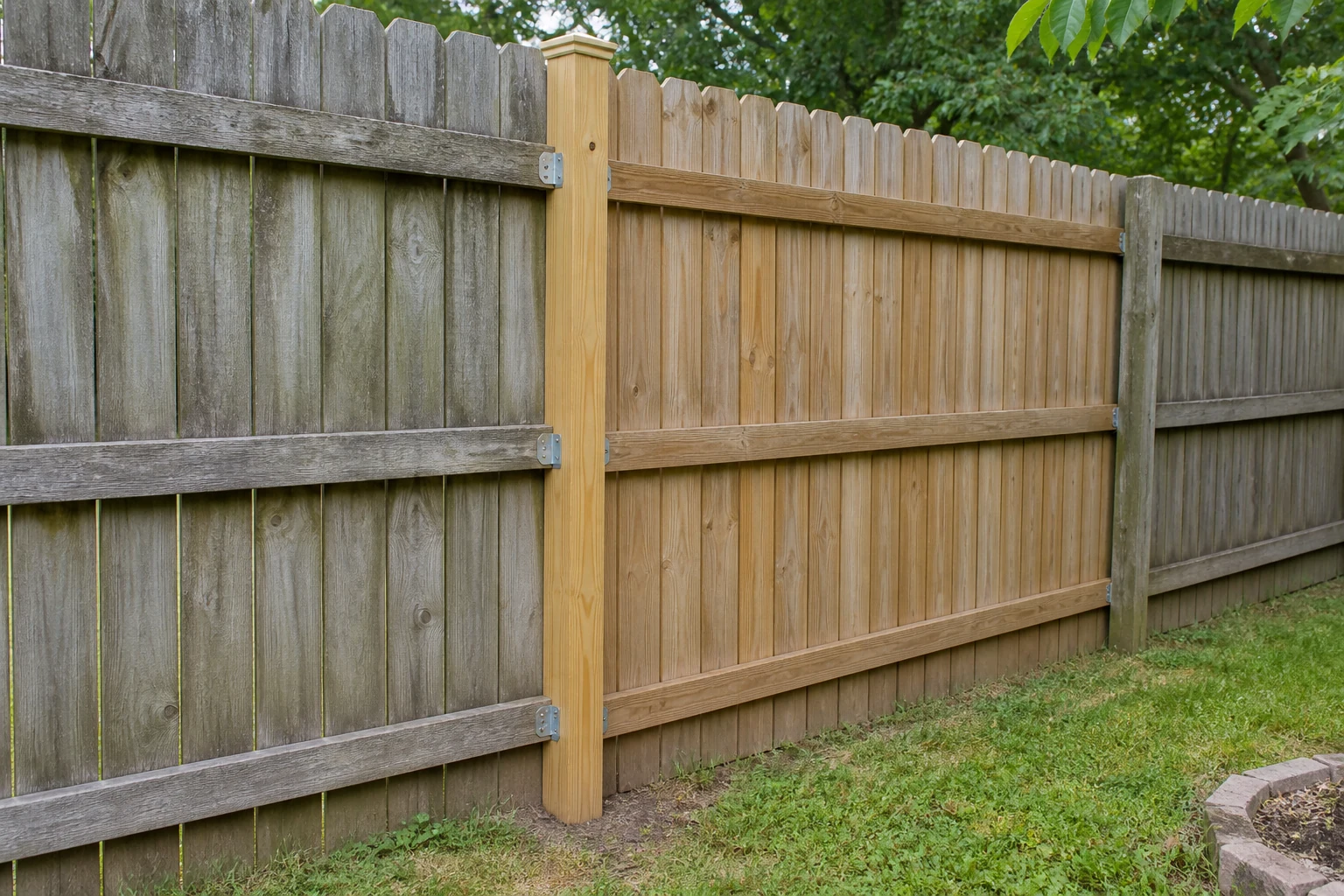
Targeted repair
Best considered when the issue is limited, adjoining structure is serviceable, and compatible work can be defined.
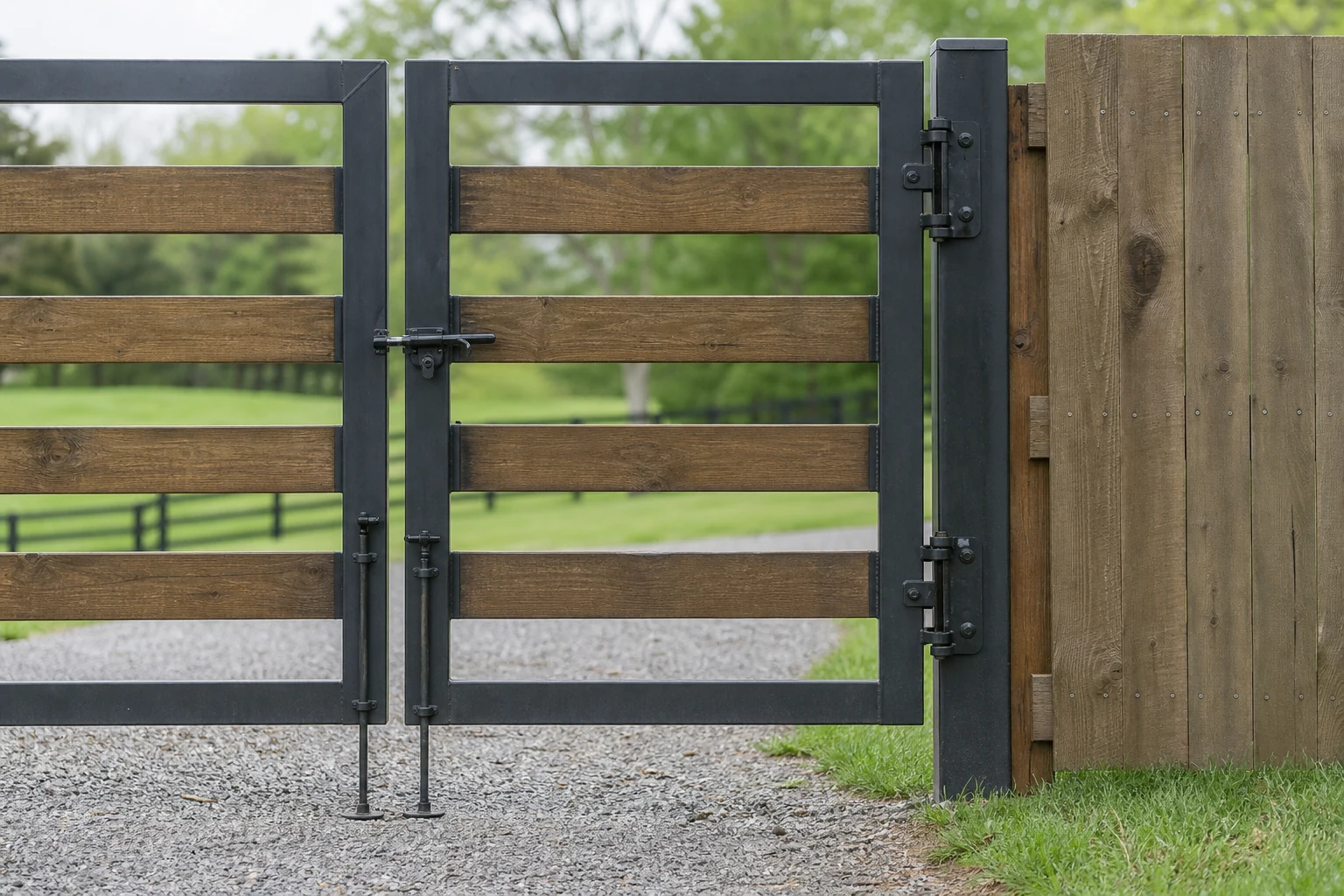
Section replacement
Useful when one run or gate area can be rebuilt with clear transitions to fence worth retaining.
Full replacement
More coherent when failures are widespread, material is obsolete, or the property needs a different enclosure.
Safety response
Restrict access around unstable gates, sharp wire, fallen panels, loose rails, or other hazards before planning cosmetic work.
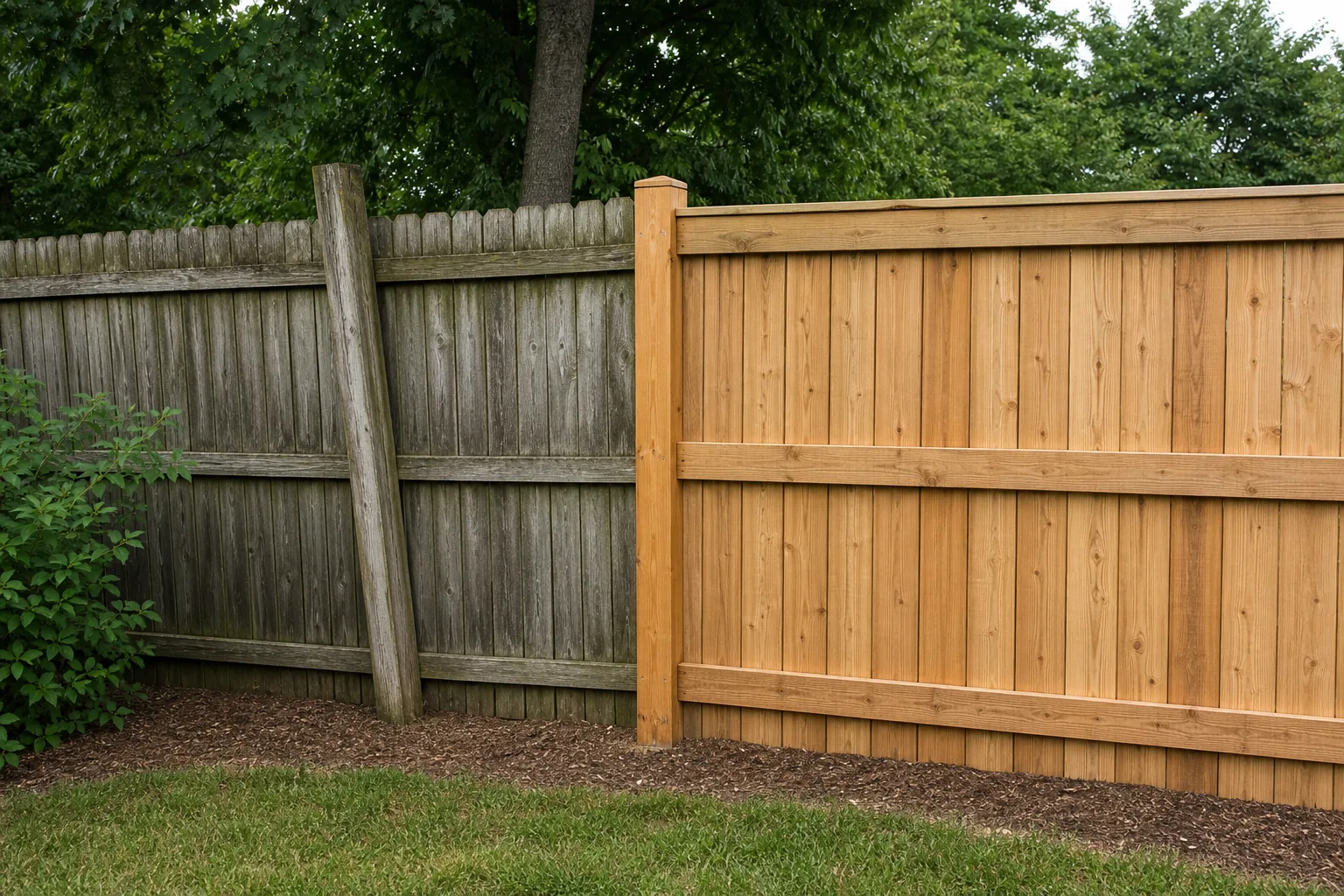
Project detail
Fence repair and replacement
Notice the affected component, adjoining material, post and connection condition, alignment, and transition between retained and replacement work.
Planning section 1 of 4
Diagnose the failure and its extent
Start with why the fence failed
A broken board, leaning post, sagging gate, loose panel, rusted fabric, or separated rail is a symptom. Photograph impact, drainage, soil movement, roots, vegetation, hardware, connections, grade, and loads that may have contributed. Ask whether the cause is isolated or continues along the run. Replacing the visible component without addressing gate weight, water, soft ground, corrosion, or connected movement can turn a repair into a repeat failure.
Map damage across the entire line
Walk both sides where access is safe and photograph every run in order. Count failed posts, loose rails, broken boards, damaged panels, bent fabric, gate issues, open gaps, and misalignment. Mark them on a sketch. A single close-up can make widespread deterioration look isolated, while one dramatic damaged panel can make a sound fence look worse than it is. The repair decision should be based on the full pattern, not the first visible defect.
Planning section 2 of 4
Compare structural condition and matching
Evaluate posts, supports, and connections
Posts and connections control whether remaining fence can be retained. Show posts at grade, visible footing or concrete, rails, brackets, fasteners, tension components, hinges, latches, and transitions. Movement at one gate post may affect the whole opening. A replacement panel attached to weak posts does not create a sound section. Because concealed condition may not be visible until work begins, the written scope should explain how additional findings are handled.
Check material and profile availability
Exact boards, panels, rails, caps, fabric, coating, posts, hardware, and ornamental profiles may be discontinued or may weather differently from new material. Measure dimensions and photograph profiles and connections closely. Decide whether the priority is structural function, a close visual match, or a uniform appearance. A section replacement can be practical even with visible variation, but a highly visible boundary may justify a broader coordinated replacement when matching is unrealistic.
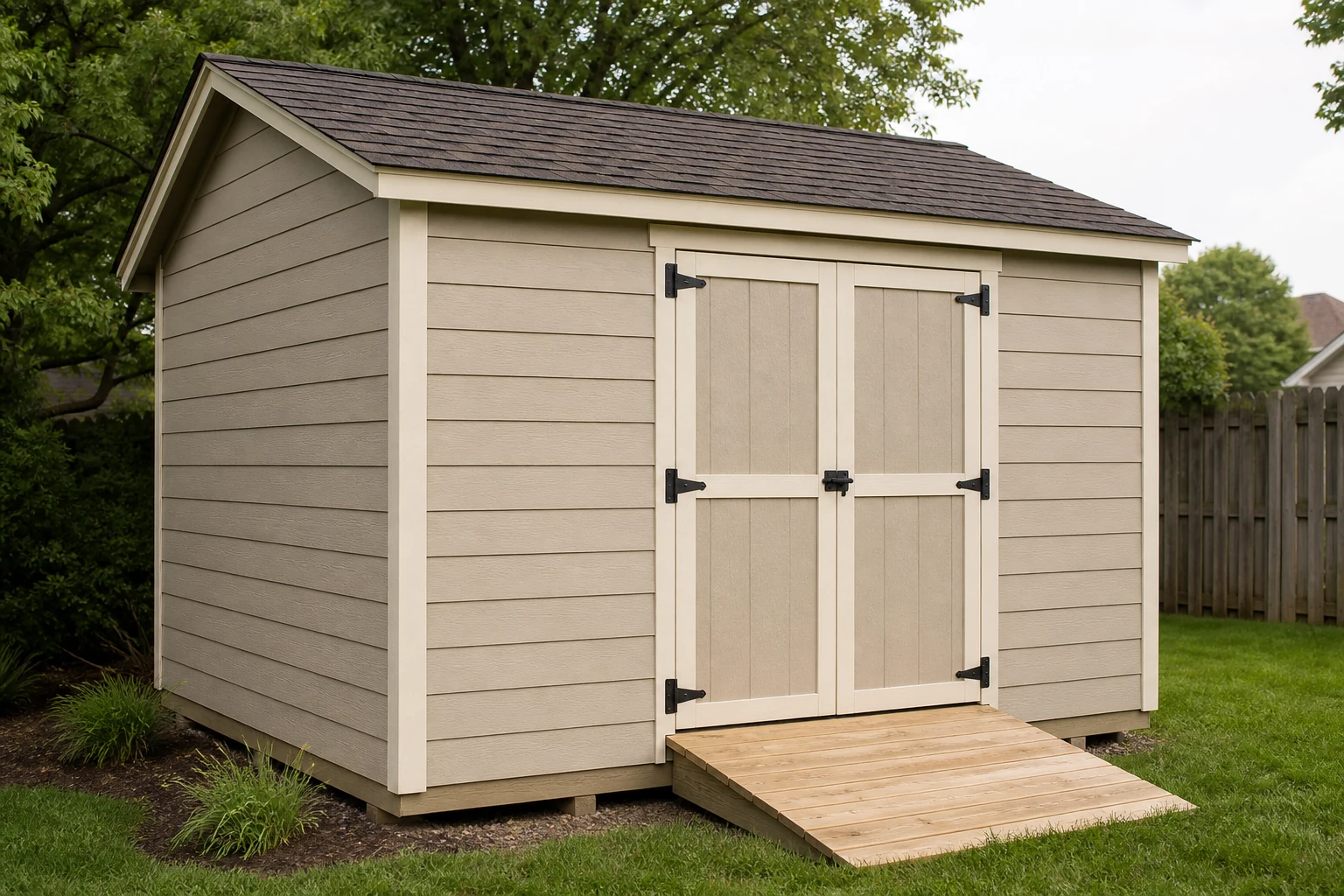
Project detail
Shed repair details
Notice the shed footprint, base, roof, doors, trim, drainage, and access details that connect the structure to the surrounding property.
Planning section 3 of 4
Compare repair concentration with future use
Ask whether the old layout still serves the property
Repairing a fence preserves its current route, height, gate arrangement, privacy level, and material direction unless the scope changes. Before investing in repairs, ask whether pets, equipment, vehicles, privacy needs, outdoor use, accessibility, farm use, or business operations have changed. A better gate location, wider opening, different sightline, or new material goal may favor redesigning part or all of the line instead of restoring an arrangement that no longer works.
Compare repair concentration with replacement coherence
A targeted repair makes sense when a small number of components can be corrected and the retained fence remains worth supporting. Section replacement works when one run can transition cleanly. Full replacement becomes more coherent as failing posts, rails, panels, hardware, finish, and alignment spread, especially when matching is poor or repeated service is likely. Compare the resulting fence, not only the number of parts replaced today.
Planning section 4 of 4
Include access, cleanup, and photo evidence
Include access, removal, and cleanup
Repair can still require material handling, disassembly, old concrete or post removal, vegetation work, gate access, and disposal. Show narrow passages, soft yards, occupied areas, nearby structures, and the route used to reach the damaged section. State what old material should be transported, retained, stacked, or handled by the owner. Separate ordinary cleanup from ground reshaping, drainage, landscape restoration, hardscape repair, or specialty work.
Create a repair-decision photo package
Prepare one marked sketch, a sequence of wide photos, and labeled close-ups of each failure. Add material and profile dimensions, approximate footage, gate details, access, cause history, prior repairs, and the outcome you want. State whether you are open to a visible transition, section replacement, changed layout, or full replacement. This package lets the first conversation compare realistic paths without pretending photos can certify concealed condition or guarantee an exact match.
Common questions
Fence Repair or Replacement: How to Compare FAQ
These answers frame the first conversation. Site conditions and the requested scope still control the project details.
Can one fence post be repaired without replacing the section?
Sometimes, if adjoining materials can be disconnected and retained and the cause, footing, alignment, and connected loads can be addressed.
Will new material match the old fence?
Exact color, weathering, dimensions, profiles, coating, and hardware may not match. Decide whether function or visual uniformity matters more.
When is section replacement useful?
When damage is concentrated in one coherent run and transitions to serviceable retained fence can be planned clearly.
What should I do with an unsafe fence or gate?
Keep people and animals away from unstable, sharp, fallen, or moving areas and arrange project-specific help rather than relying on online guidance.
Can photos determine the final repair scope?
No. They help with initial review but cannot reveal every concealed post, footing, corrosion, soil, connection, or structural condition.
Get your free estimate
Turn the guide into one clear request.
When the route, approximate dimensions, material direction, gates, access, existing conditions, preparation, responsibilities, and photos are organized, use the estimate page to share the project. Keep open questions labeled instead of filling gaps with assumptions.
Request a KY Fencing Works estimate
Share the property location, the work you need, useful dimensions, access notes, and any helpful photos.