
Fence, gate & outdoor work
Fence Gate Installation
A gate works only when its opening, swing, support, grade, and hardware are planned around the people or equipment using it.
Measure the required clear opening and show the approach from both sides. Include the adjoining fence, post condition, slope, pavement or soil, latch use, desired material, and whether the request is part of new fencing or a change to an existing line.
Request an estimate
Useful for
New fence openings, replacement gates, wider equipment access, farm entrances, and manual vehicle or pedestrian access.
Key choice
Clear opening, swing direction, approach space, grade, daily use, material, posts, latch, and hardware.
Send first
Property location, approximate length, gate openings, access notes, slope or grade changes, removals, and helpful photos.
Coverage
Nicholasville-centered requests plus nearby communities are reviewed from the actual property address.
Start with the outcome
What fence gate installation can help organize
A useful scope connects the material and layout to how the property needs to work.
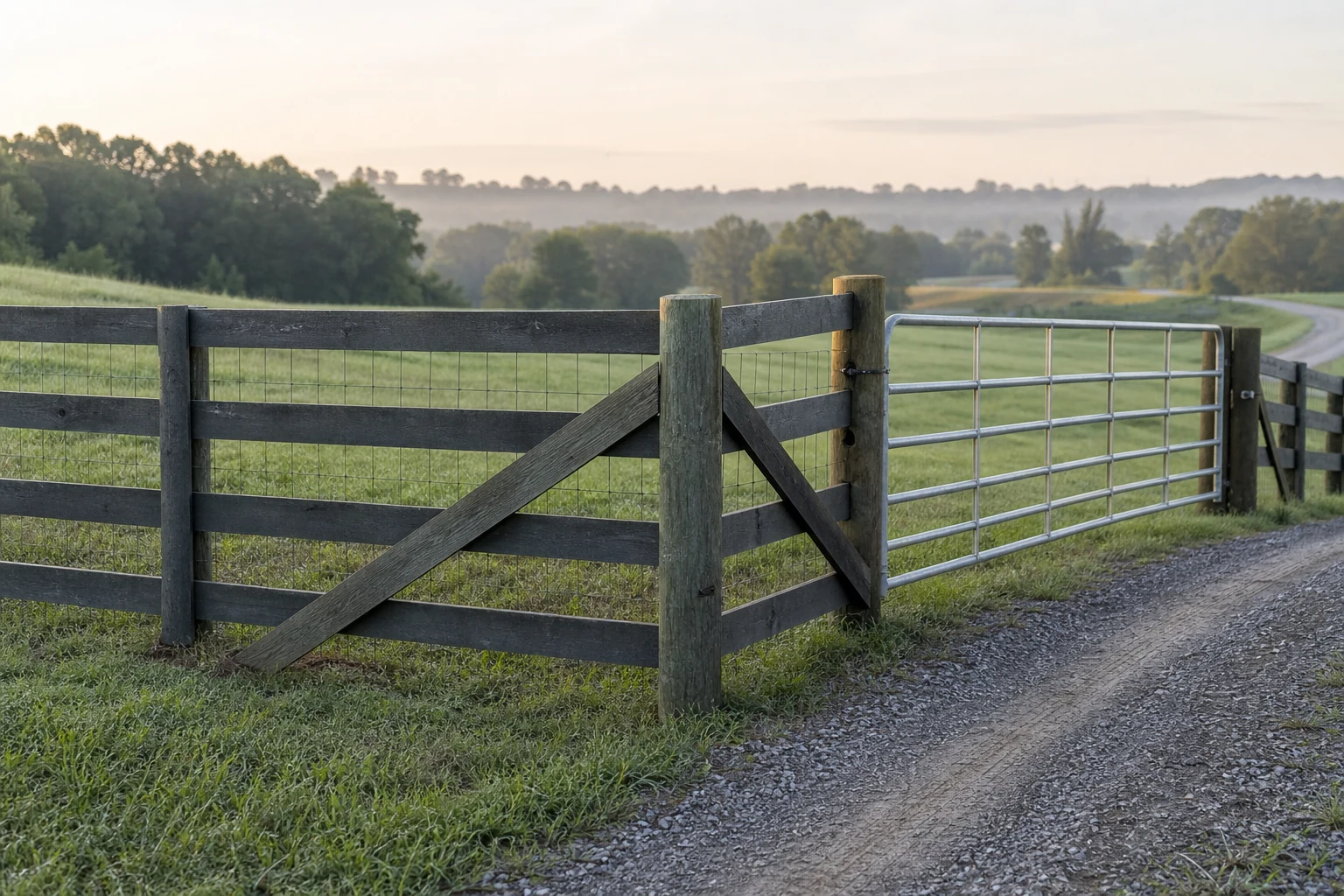
Size the opening
Pedestrian, mower, equipment, trailer, livestock, and vehicle access each need a deliberate clear width.
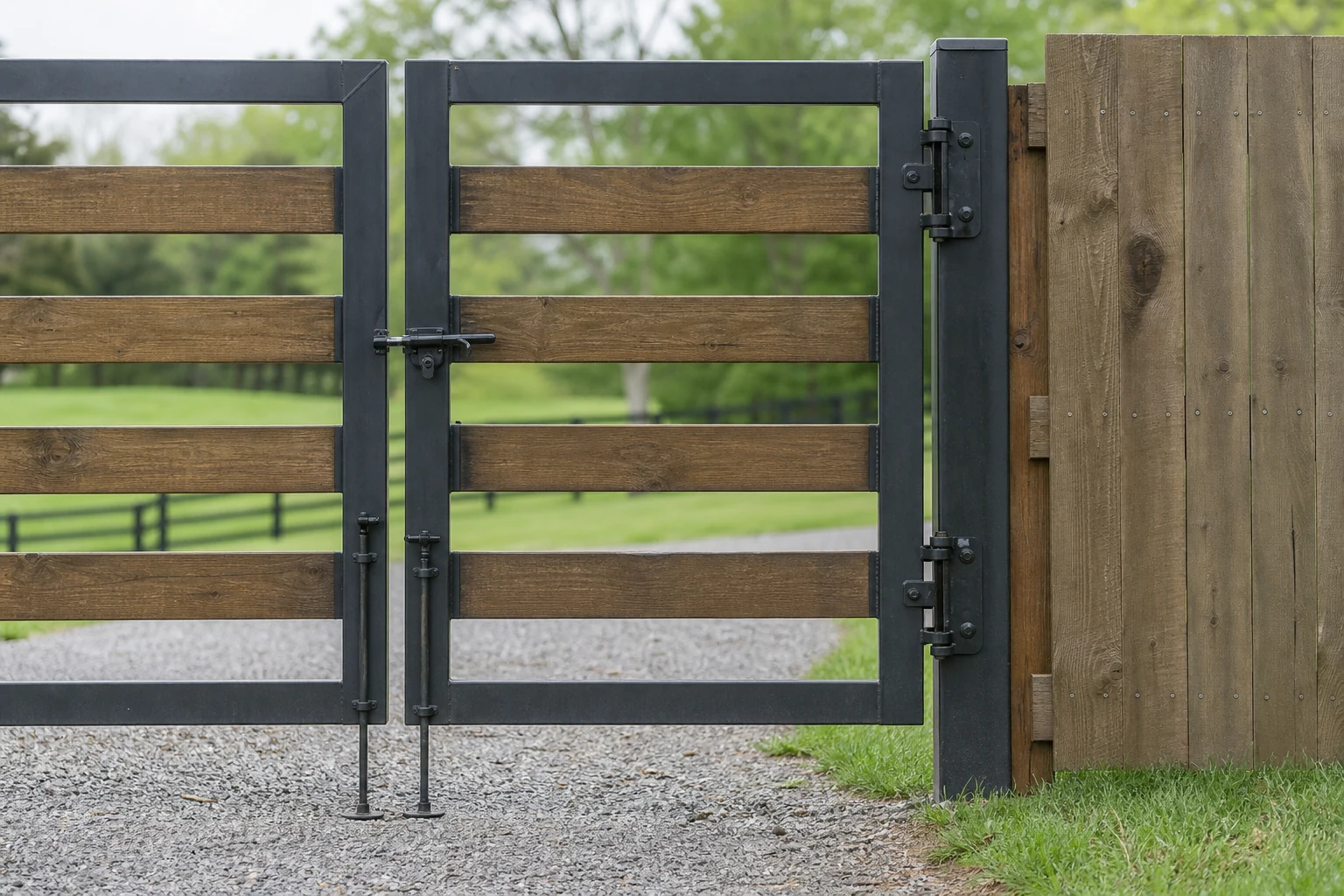
Protect the movement path
Swing direction, grade, obstacles, and approach space determine whether the opening can function day to day.
Coordinate the fence
Gate frame, posts, infill, finish, and hardware can be reviewed with the adjoining fence instead of in isolation.
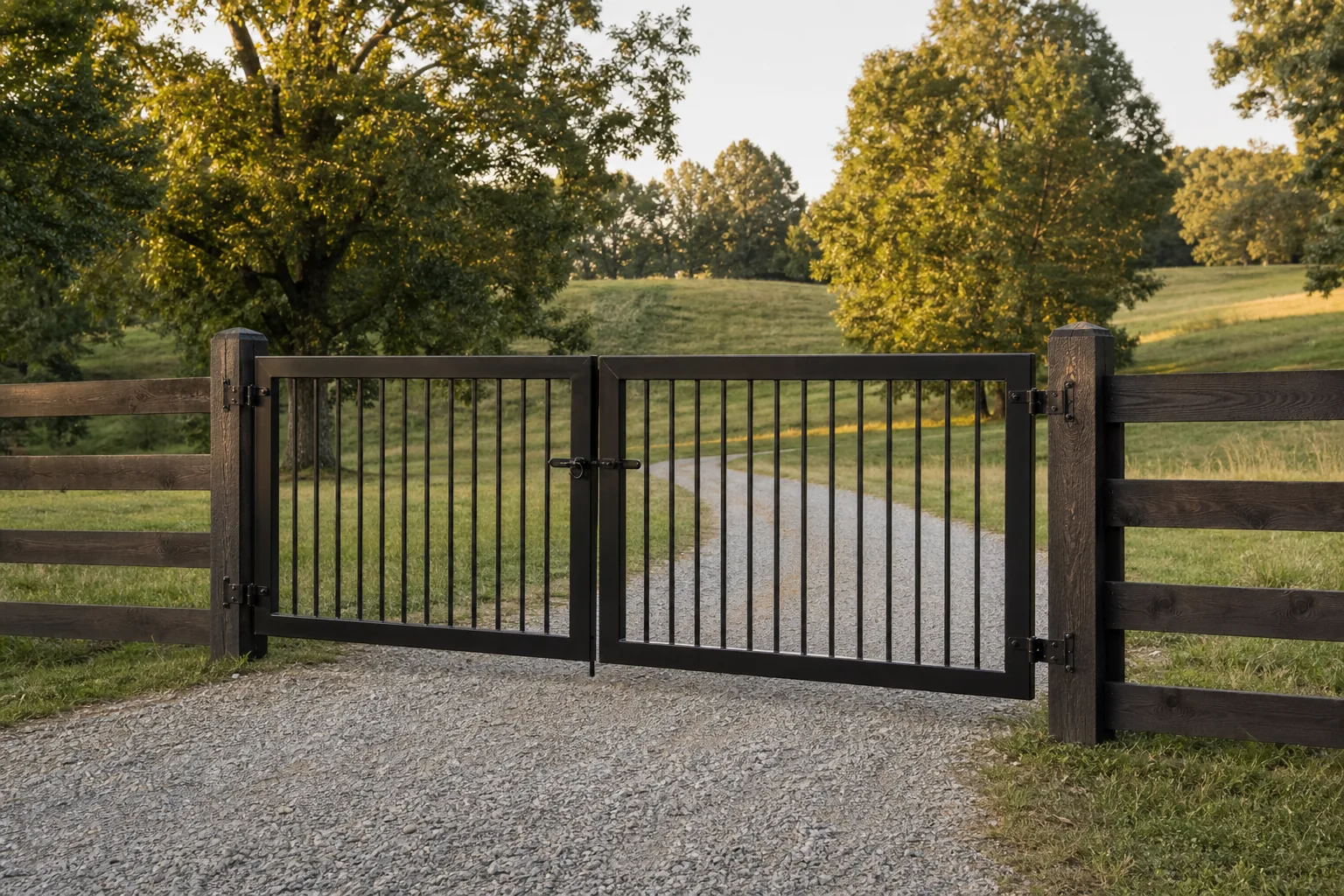
Project detail
Manual driveway gate
Notice the clear opening, approach, swing, support, hardware, and nearby transitions that shape how the opening needs to work.
Make the decision concrete
Where fence gate installation fits
Start with the intended use, then review the site conditions and choices that can change the scope.
Good fit when
Opening width is only one gate measurement. The leaf or leaves need support, space to move, appropriate hardware, and a landing that does not bind against grade. A replacement request also depends on the condition and alignment of the posts and fence around it.
- New fence openings, replacement gates, wider equipment access, farm entrances, and manual vehicle or pedestrian access.
- A defined fence line, a clear use for the enclosure, and enough property detail to compare a practical scope.
- Key choices: clear opening, swing direction, approach space, grade, daily use, material, posts, latch, and hardware.
- The property details can be documented without relying on unsupported assumptions.
Scope-changing details
Powered gate operators, keypads, card readers, intercoms, safety devices, electrical work, and access-control integration are not included by the phrase “gate installation.” Those systems require separate documented scope and may involve specialty providers or current code review.
- People, pets, bins, mower, tractor, trailer, livestock, or vehicle use
- Single swing, paired swing, or another manual configuration
- In-swing or out-swing direction and available landing space
- Latch, drop rod, stop, hinge, and everyday access expectations
Record known conditions, open questions, and unresolved responsibilities before materials or layout are treated as settled.
Compare practical directions
Fence Gate Installation options and use cases
These are planning categories, not promises that every system or variation fits every site.
Walk gate
A pedestrian opening can be planned around daily path, latch access, slope, and the fence profile.
Equipment gate
A wider opening should reflect the actual mower, tractor, trailer, or service equipment path.
Farm gate
Field and lane gates need clear turning, animal-management, terrain, and support details.
Replacement gate
A replacement begins with post alignment, opening dimensions, adjoining fence, hardware, and failure cause.
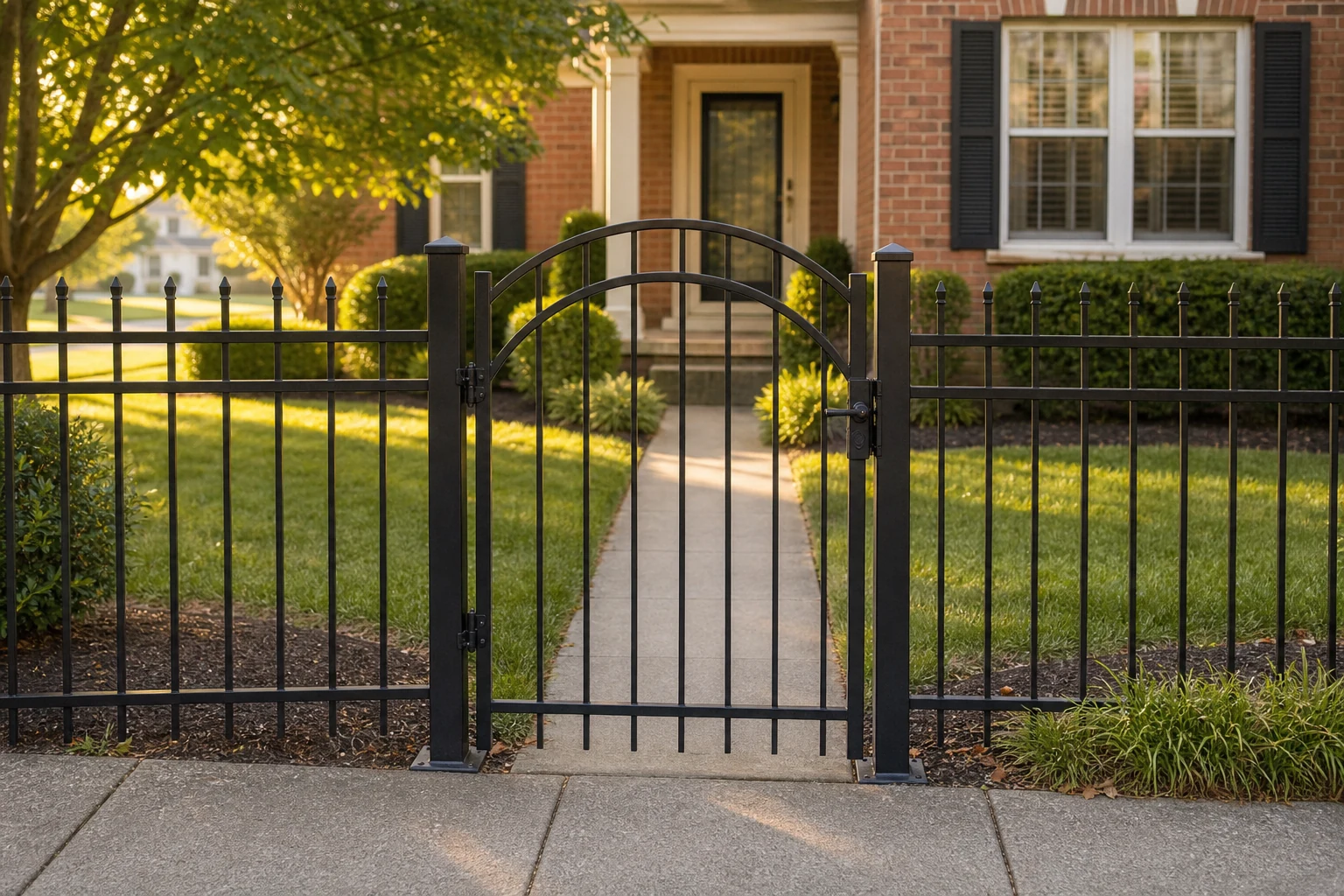
Project detail
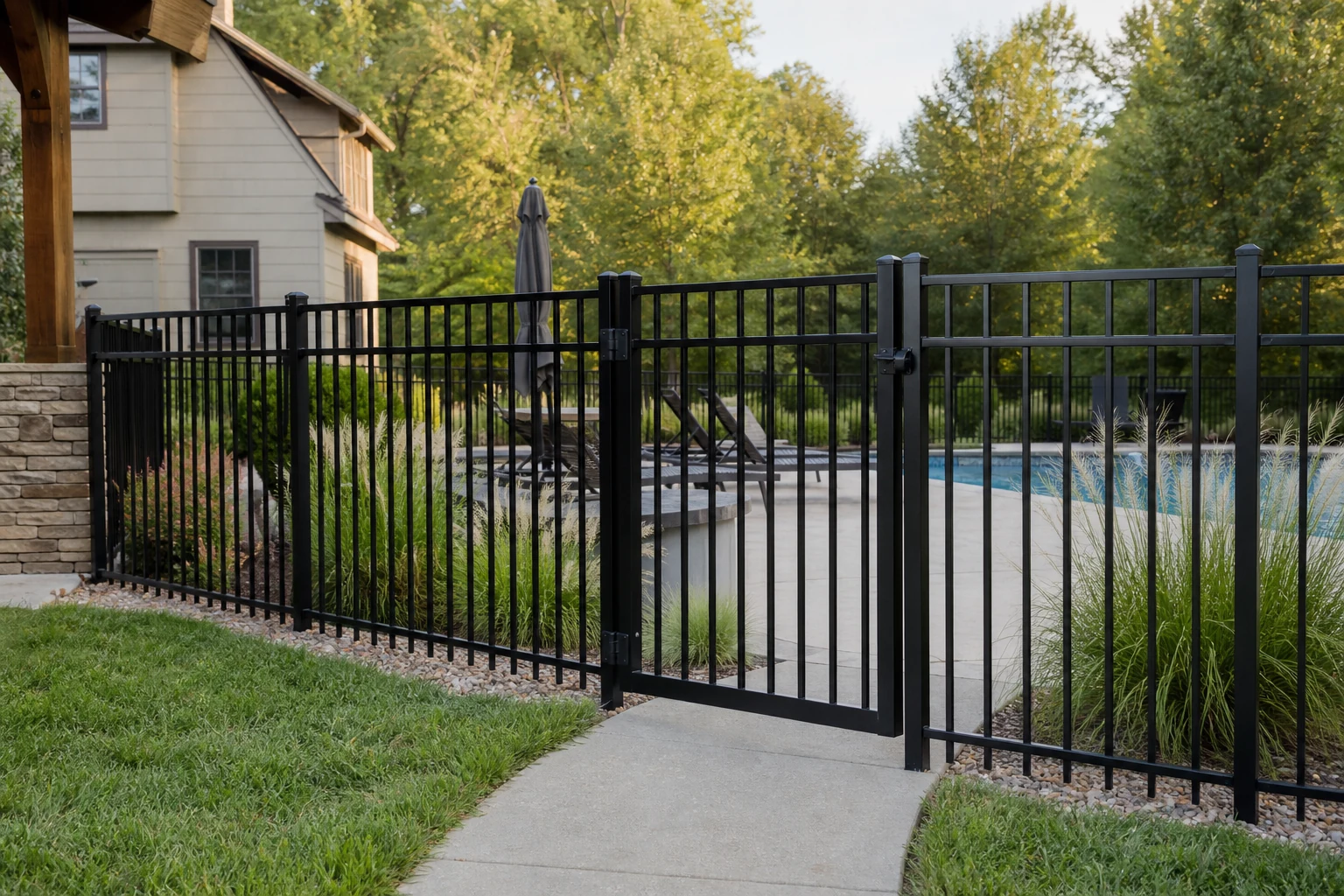
Ornamental entry gate
Notice the clear opening, approach, swing, support, hardware, and nearby transitions that shape how the opening needs to work.
A clear path
From request to a defined fence gate installation scope
The same four-step rhythm keeps project details, site context, decisions, and next actions easy to follow.
Share the location
Send the property address, contact details, desired outcome, approximate dimensions, and the photos that explain the route or work area.
Show the conditions
Document grade, access, existing materials, structures, hardscape, vegetation, drainage, utilities, and every gate or transition.
Compare the scope
Review the fence gate installation direction, exclusions, owner responsibilities, material choices, and any information still needed.
Confirm next steps
Use the written conversation to confirm what is being considered before treating layout, material, preparation, or approvals as settled.
Prepare a useful request
Measure broadly, photograph clearly, and label uncertainty
Include these project details
A rough sketch and overlapping photos usually explain more than one close-up image.
- Measure clear opening at more than one height if posts are out of alignment
- Photograph the approach, landing, grade, hinges, latch, and adjoining fence
- State the largest item that must pass through and how often
- Separate manual gate work from any powered operator or access-control request
Confirm the site context
Keep measurements, photos, access, and responsibilities clear before the scope is finalized.
- Label preliminary measurements as approximate and identify any uncertain endpoints
- Show corners, openings, grade changes, adjoining work, and the full access route
- Photograph transitions and constraints from more than one useful angle
- Confirm property-line, utility, HOA, permit, and code responsibilities separately
Common questions
Fence Gate Installation FAQ
These answers frame the first conversation. Site conditions and the requested scope still control the project details.
How do I choose a gate width?
Measure the largest expected user or equipment and include turning, approach, mirrors, implements, and comfortable clearance.
Can a gate swing over a slope?
Slope can limit swing and ground clearance. Show the opening from both sides and state the preferred swing direction.
Can a gate be added to an existing fence?
Possibly. The fence material, post locations, support, alignment, opening space, and matching components need review.
Does gate installation include an automatic opener?
No automatic operator or access-control system is assumed. Identify that separately so specialty and electrical needs are clear.
What photos help with a replacement gate?
Send a wide view, both posts, hinges, latch, bottom clearance, adjoining panels, grade, and the path through the opening.
Get your free estimate
Send the details that shape the work.
For fence gate installation, send the property location, intended result, approximate dimensions, material direction, gates or openings, existing conditions, access constraints, and clear photos. Do not wait for perfect drawings; label rough information honestly so the first review starts from useful facts.
Request a KY Fencing Works estimate
Share the property location, the work you need, useful dimensions, access notes, and any helpful photos.