
Fence planning resource
Fence Material Comparison Guide
The best fence material is the one that fits the property’s real use, layout, grade, gates, appearance priorities, upkeep tolerance, and component needs.
Use this guide to narrow the conversation without treating a general material label as a finished specification. Product systems, site conditions, availability, approvals, and written scope still control the project decision.
Request an estimate
Begin with use
Privacy, pets, boundary, farm, business, access, repair, or appearance.
Compare the whole line
Material, profile, height, gates, grade, corners, and transitions.
Plan for ownership
Cleaning, finish, inspection, repair, vegetation, and component replacement.
Send evidence
Marked route, approximate dimensions, access notes, and overlapping photos.
Use the guide in order
Four lenses for a cleaner project decision
Each lens carries comparable weight so the plan does not over-focus on material while ignoring the property and responsibilities.
Solid privacy systems
Compare wood, vinyl, and composite around appearance, grade, gates, maintenance, and coordinated components.
Open-view systems
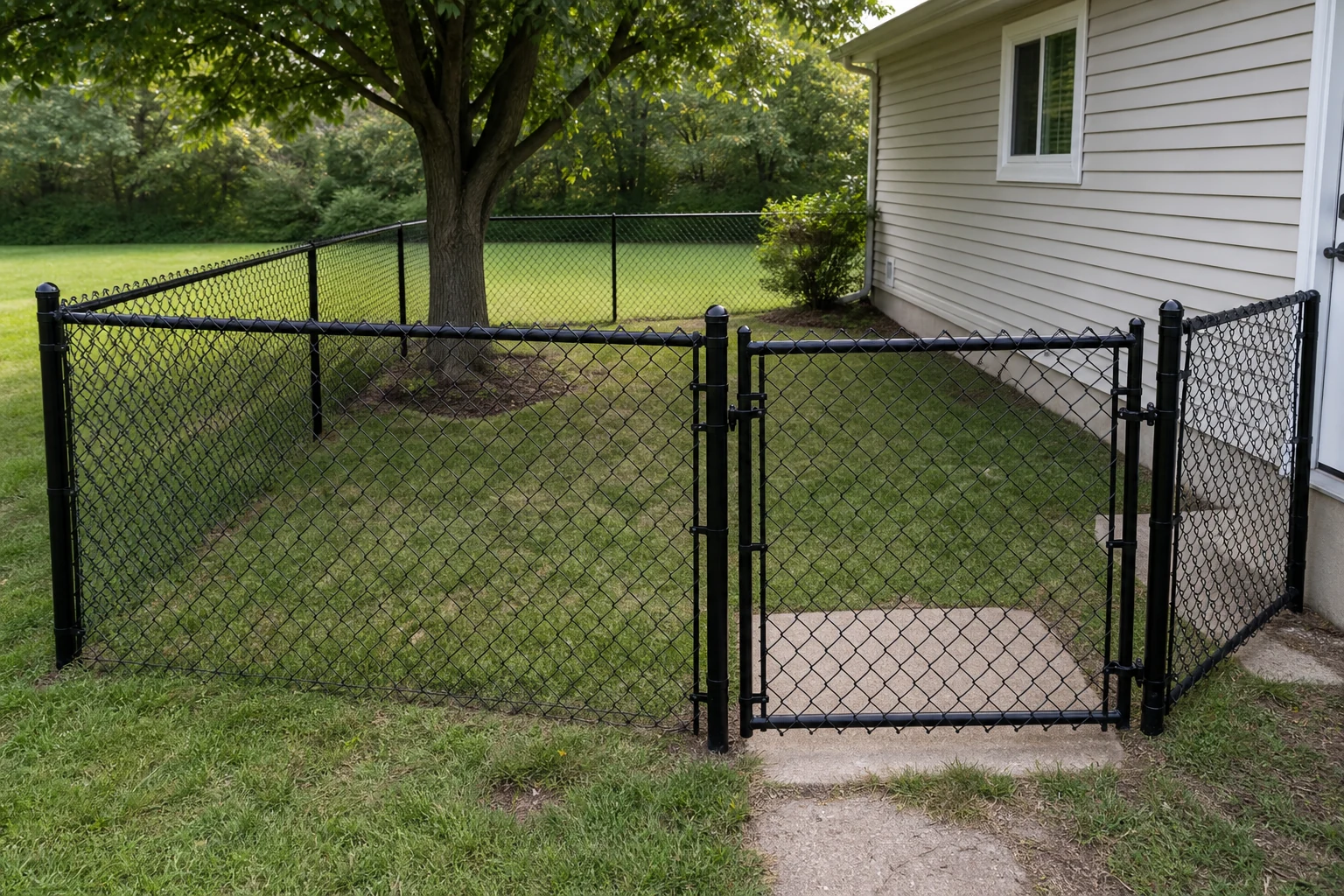
Compare chain link, aluminum, and ornamental profiles around visibility, containment, spacing, finish, and access.
Rural systems
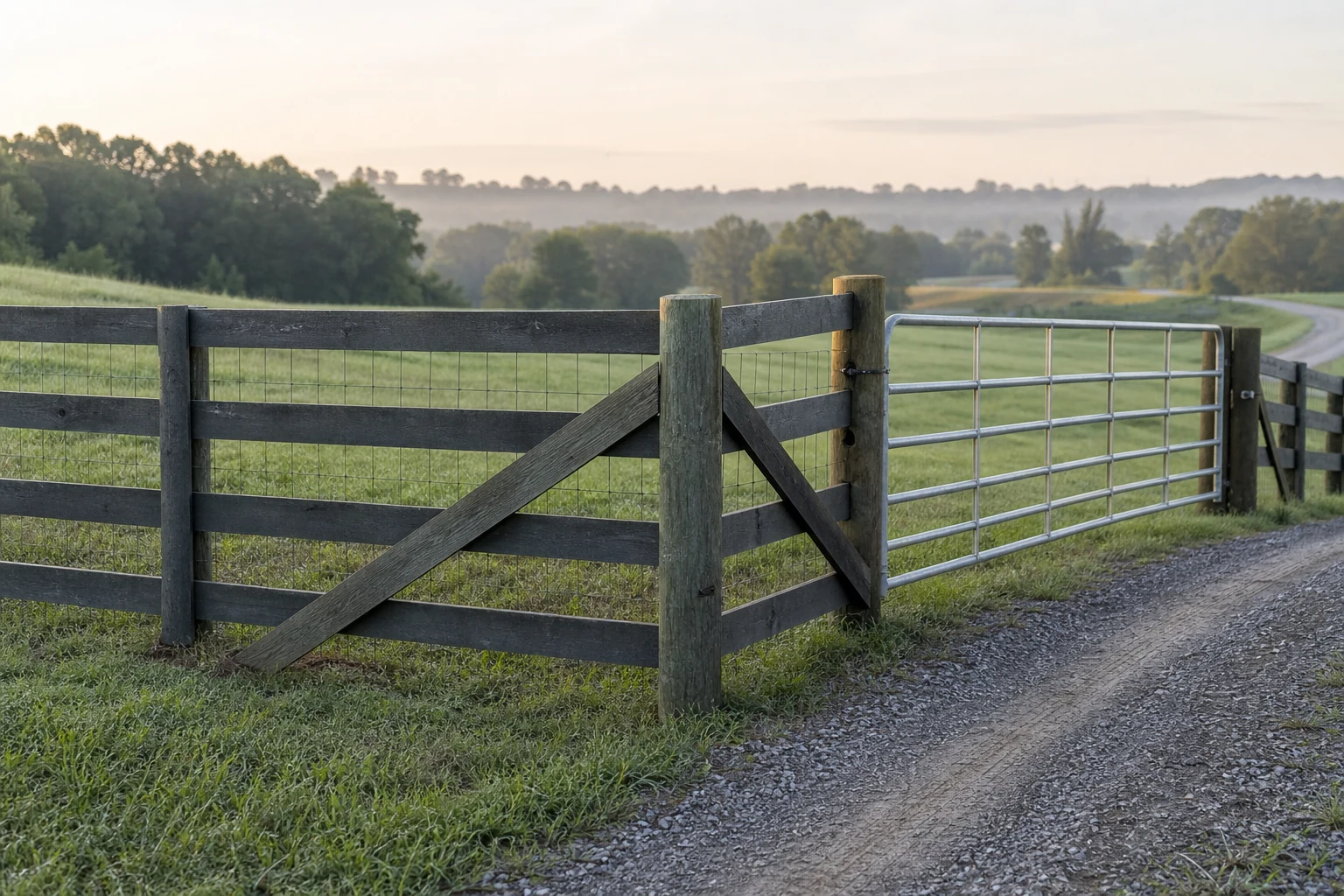
Compare board, rail, mesh, wire, and mixed layouts around animals, terrain, long runs, gates, and upkeep.
Repair reality
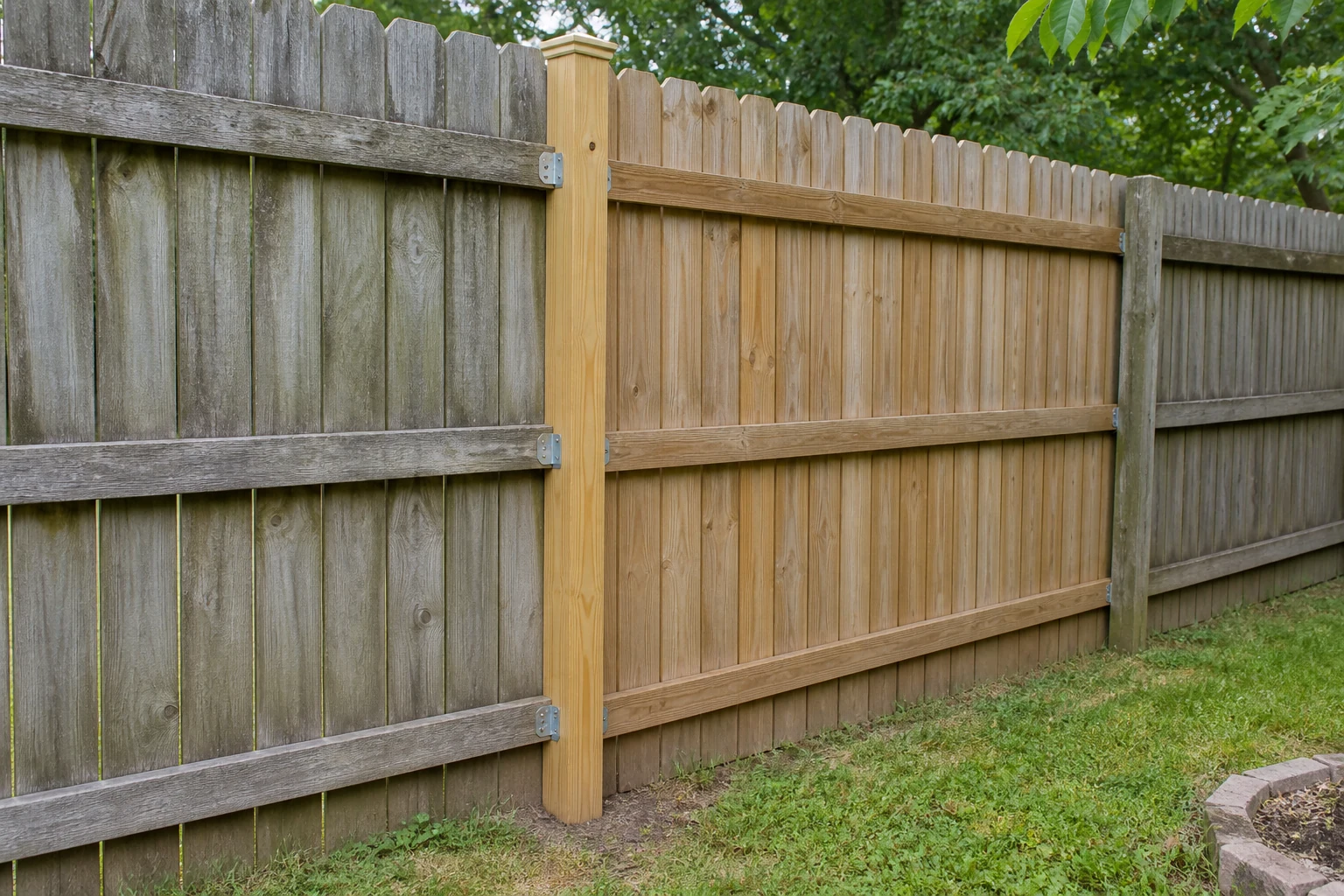
Consider matching materials, post condition, weathering, discontinued profiles, and whether the remaining run is worth retaining.
Project detail
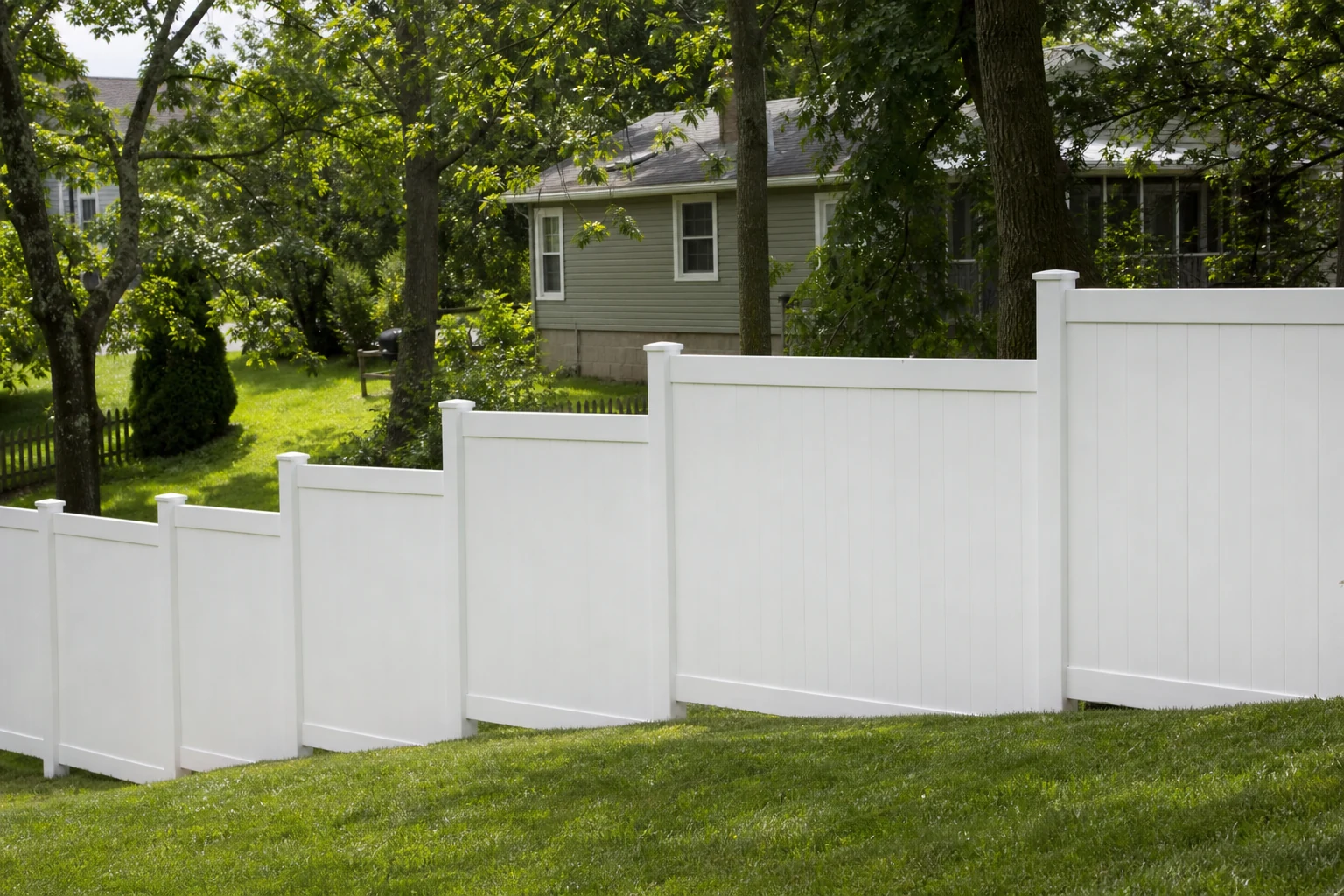
Vinyl fence on a slope
Notice the material profile, post and rail pattern, grade response, openings, and transitions that connect the fence system to the property.
Planning section 1 of 4
Match the material to the job
Start with the job, not the sample
A fence sample can show color and texture, but it cannot explain what the enclosure needs to do. Write down the primary job first: screening a patio, containing a pet, defining a farm lane, organizing a commercial perimeter, framing a landscape, or restoring a failed section. Then list secondary goals such as airflow, visibility, appearance, gate access, or lower finish upkeep. This order prevents one attractive profile from being forced onto a property where its spacing, grade behavior, gate system, or maintenance pattern does not fit.
Wood: adaptable profiles with finish decisions
Wood can support privacy boards, pickets, horizontal layouts, board fencing, rails, gates, and targeted repairs. Its field-built flexibility can help at corners and grade transitions, but species, treatment, moisture exposure, drainage, fasteners, finish, and maintenance direction matter. Decide whether stain, paint, sealing, or natural weathering is expected and who handles that work. For repairs, exact color and weathering matches are unlikely even when dimensions are available, so distinguish structural function from visual matching.
Planning section 2 of 4
Compare complete manufactured systems
Vinyl and composite: compare complete systems
Vinyl and composite fences use coordinated panels or boards, posts, rails, caps, gates, and hardware. Treat them as systems rather than interchangeable raw materials. Panel width, product profile, color, gate availability, corners, short closing sections, and grade transitions affect layout. Composite or Trex-style language describes a visitor’s direction and does not imply manufacturer affiliation. If an exact system is important, provide the product reference; if alternatives are acceptable, state which appearance and component qualities must remain.
Chain link: practical enclosure with specification choices
Chain link retains visibility and can serve yards, equipment areas, commercial perimeters, and long runs. The request still needs height, fabric and coating direction, terminal layout, top or bottom treatment, gate sizes, grade, and any screening. A residential pet enclosure is not the same specification as a vehicle-access business perimeter. Explain who or what the fence manages, what must pass through each opening, and whether privacy slats or another added surface is being considered.
Project detail
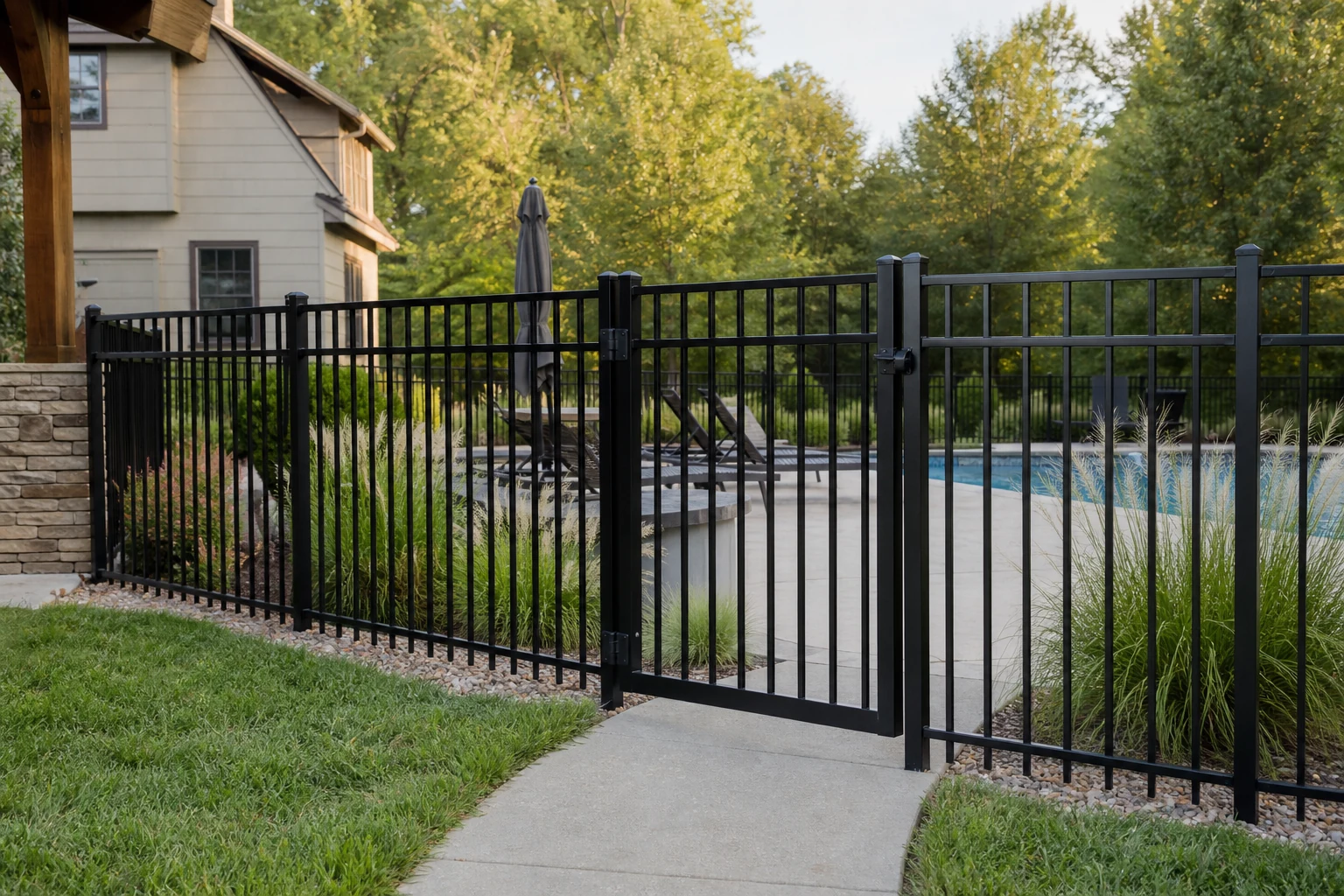
Aluminum open-picket fence
Notice the material profile, post and rail pattern, grade response, openings, and transitions that connect the fence system to the property.
Planning section 3 of 4
Match metal and farm systems to use
Aluminum and ornamental metal: profile meets purpose
Aluminum panel systems can provide an open decorative boundary with coordinated gates and finishes. Ornamental iron requests may involve standard panels, fabricated details, existing metalwork, corrosion, or matching repairs. In both cases, photographs should show spacing, posts, rails, finials, gates, grade, hardscape, and connection points. No decorative profile should be assumed to satisfy a pool, stair, guard, or other regulated-barrier requirement; those questions need current project-specific review.
Farm, pasture, board, and rail: use controls the choice
Rural fence planning begins with animals, field use, visibility, terrain, gates, equipment, and maintenance—not with a picturesque front view. One property may justify a higher-visibility board treatment at the entrance, another system at paddocks, and practical transitions at woods or working areas. Mark lanes, barns, water, roads, long runs, corners, drainage, gates, and future divisions on an aerial. State any electrification or specialty containment need separately instead of assuming it belongs to the base fence.
Planning section 4 of 4
Test the comparison against the real site
Grade, gates, and transitions expose weak comparisons
Materials that look similar in a flat catalog image can behave differently on a changing grade or at a short return. Compare stepped versus grade-following appearance, bottom gaps, panel dimensions, post spacing, gate support, and how unlike sections meet. Gates deserve their own list: clear opening, swing, approach, landing grade, users, hardware, and matching expectations. A material that fits the long runs but cannot create the needed opening or transition may not be the best whole-property choice.
Build a short comparison brief
Reduce the decision to two or three realistic directions. For each, record the desired profile, height, privacy or visibility level, gate plan, grade behavior, finish, upkeep expectations, matching constraints, and acceptable alternatives. Add the marked route, rough dimensions, access notes, and photographs. This brief gives a contractor something concrete to review while leaving room for system availability and site findings. It also prevents a single keyword such as “vinyl” or “farm fence” from standing in for the decisions that actually shape scope.
Common questions
Fence Material Comparison Guide FAQ
These answers frame the first conversation. Site conditions and the requested scope still control the project details.
Which fence material requires the least maintenance?
Avoid absolute labels. Compare cleaning, finish, impacts, vegetation, movement, hardware, weather exposure, and replacement-component availability for the actual system.
Is composite fencing the same as vinyl?
No. Both may use manufactured systems, but composition, profiles, components, appearance, availability, and installation constraints differ.
Can one property mix materials?
Yes, when each area has a clear use and transitions, heights, posts, gates, ownership, and appearance are planned deliberately.
Which material works best on a slope?
There is no universal winner. Grade amount, desired top and bottom lines, panel or board system, post spacing, and appearance control the comparison.
Should price be the first comparison?
Start with realistic fit and scope. Comparing prices before height, footage, gates, grade, removal, access, and material system are aligned produces misleading results.
Get your free estimate
Turn the guide into one clear request.
When the route, approximate dimensions, material direction, gates, access, existing conditions, preparation, responsibilities, and photos are organized, use the estimate page to share the project. Keep open questions labeled instead of filling gaps with assumptions.
Request a KY Fencing Works estimate
Share the property location, the work you need, useful dimensions, access notes, and any helpful photos.