
Fence, gate & outdoor work
Vinyl Fence Installation
Vinyl fence planning works best when the panel system, layout, and site conditions are considered together rather than selected independently.
Panel width, post locations, corners, slope, gates, and manufacturer-specific components shape the finished layout. Share the desired style and site information early so the request can be evaluated as a complete system.
Request an estimate
Useful for
Homeowners comparing a consistent manufactured finish with privacy, picket, or semi-private panel styles.
Key choice
Panel profile, color, finished height, grade transition, gate system, and matching components.
Send first
Property location, approximate length, gate openings, access notes, slope or grade changes, removals, and helpful photos.
Coverage
Nicholasville-centered requests plus nearby communities are reviewed from the actual property address.
Start with the outcome
What vinyl fence installation can help organize
A useful scope connects the material and layout to how the property needs to work.
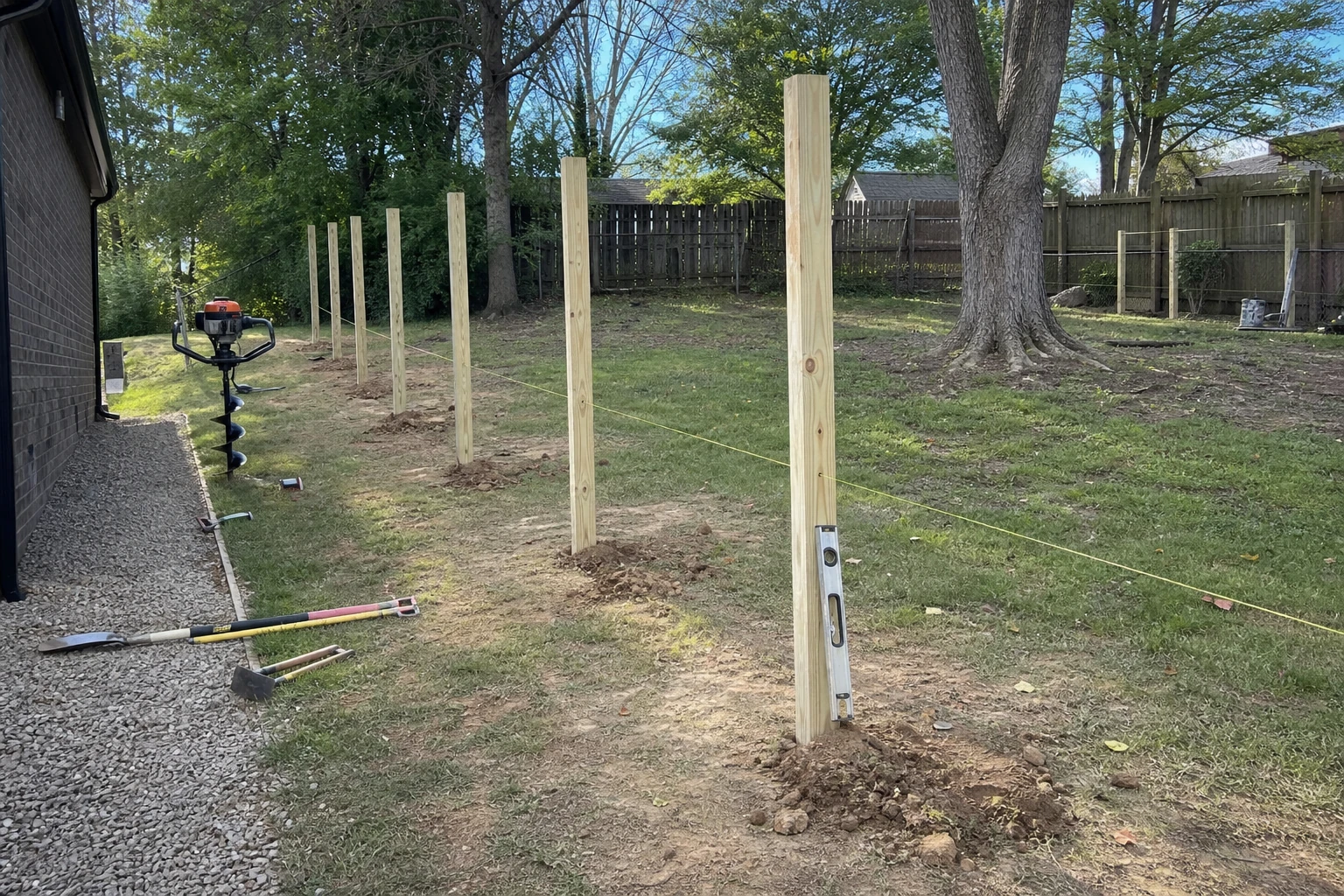
Keep a consistent finish
Manufactured panels and coordinated posts can create a uniform visual rhythm across a well-planned run.
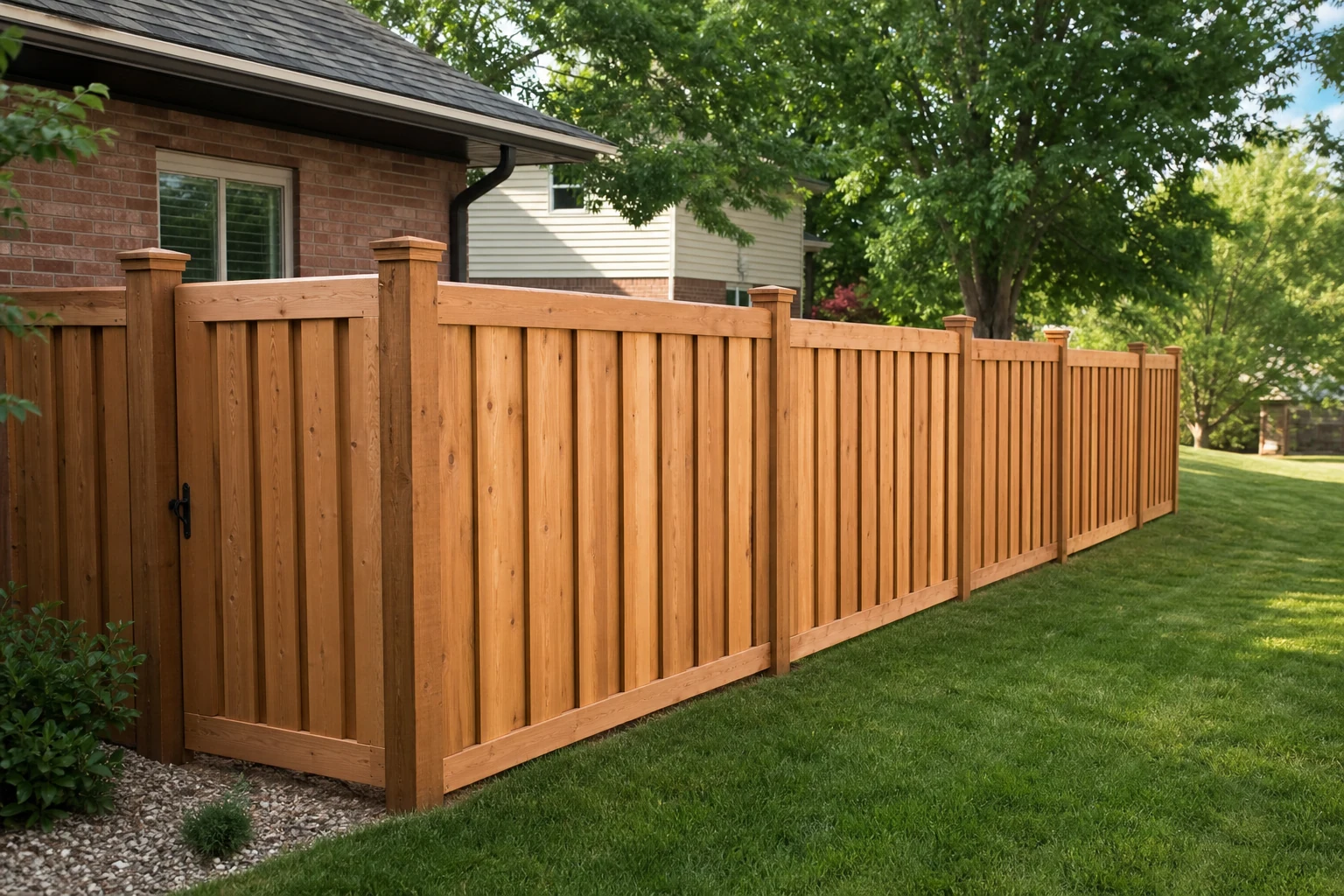
Compare enclosure levels
Privacy, semi-private, and picket profiles offer different balances of screening, airflow, and visibility.
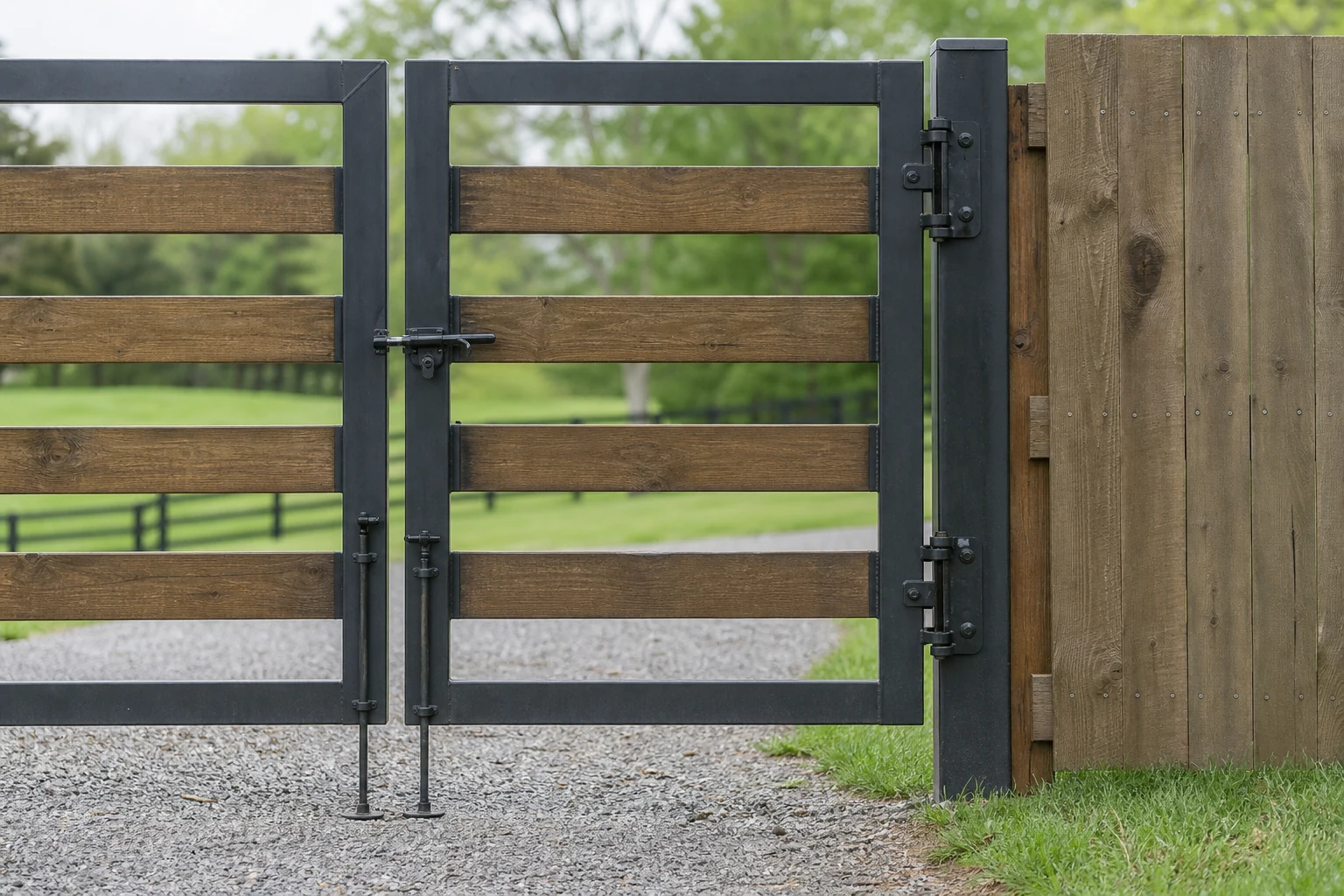
Coordinate components
Posts, caps, rails, panels, gates, and hardware can be reviewed as compatible parts of the same request.
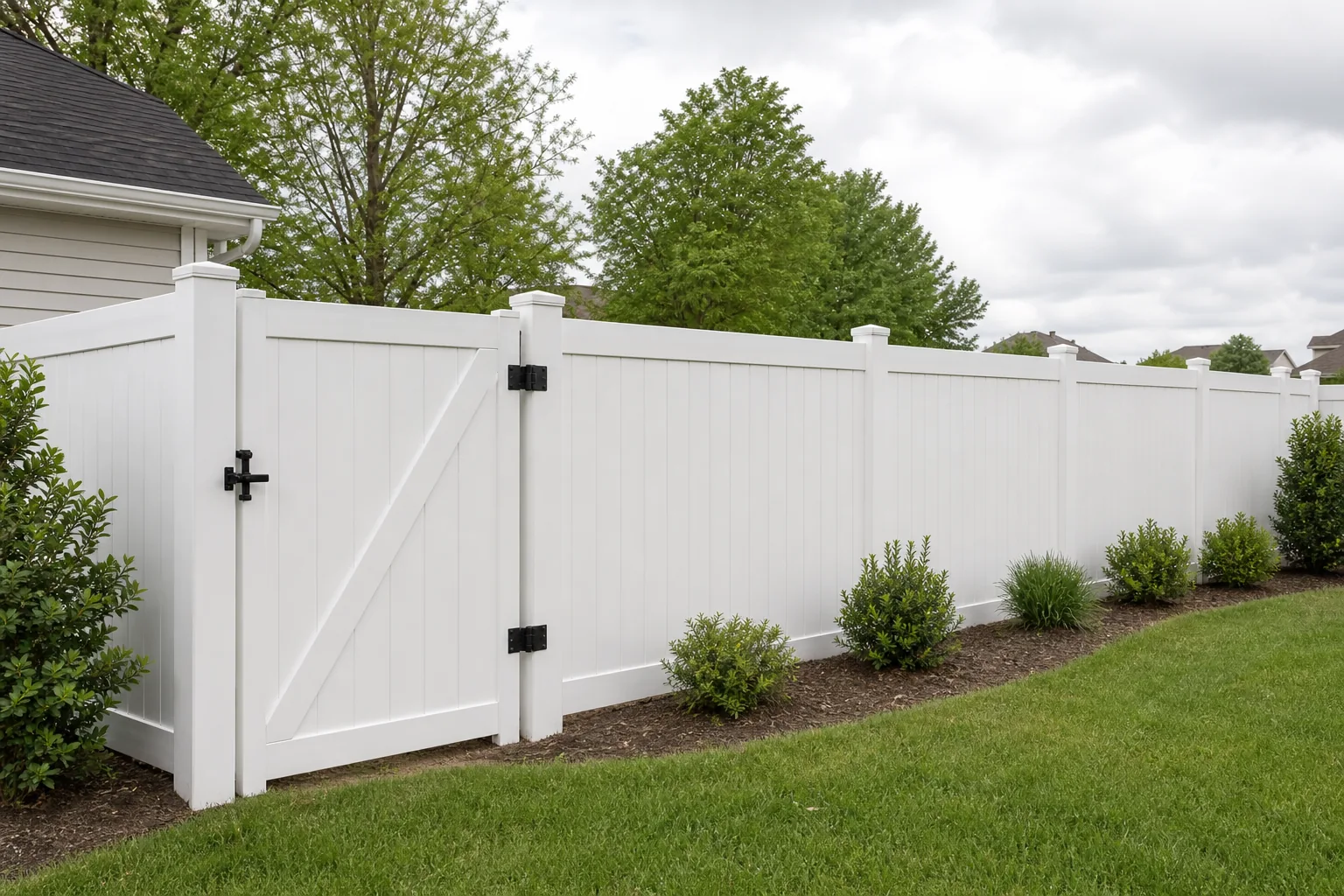
Project detail
Vinyl privacy fence
Notice the clear opening, approach, swing, support, hardware, and nearby transitions that shape how the opening needs to work.
Make the decision concrete
Where vinyl fence installation fits
Start with the intended use, then review the site conditions and choices that can change the scope.
Good fit when
Vinyl is a system of panels and components, not a generic interchangeable material. Grade changes and short closing sections may require different planning than a field-built fence. Identify the preferred profile or example first, then document the actual line and every transition.
- Homeowners comparing a consistent manufactured finish with privacy, picket, or semi-private panel styles.
- A defined fence line, a clear use for the enclosure, and enough property detail to compare a practical scope.
- Key choices: panel profile, color, finished height, grade transition, gate system, and matching components.
- The property details can be documented without relying on unsupported assumptions.
Scope-changing details
Profiles, colors, panel dimensions, and matching components depend on the selected system and availability. Do not assume a reference photo identifies an exact product. If a particular brand or profile matters, include that information and allow alternatives to be discussed.
- Full privacy, semi-private, picket, or accent profile
- White, neutral, or another available color direction
- Stepped or grade-following appearance at slopes
- Coordinated gates, caps, transitions, and end conditions
Record known conditions, open questions, and unresolved responsibilities before materials or layout are treated as settled.
Compare practical directions
Vinyl Fence Installation options and use cases
These are planning categories, not promises that every system or variation fits every site.
Full privacy panels
Solid sections emphasize screening and make grade transitions and top-line consistency important.
Semi-private panels
Alternating or spaced profiles balance some screening with more air and visual openness.
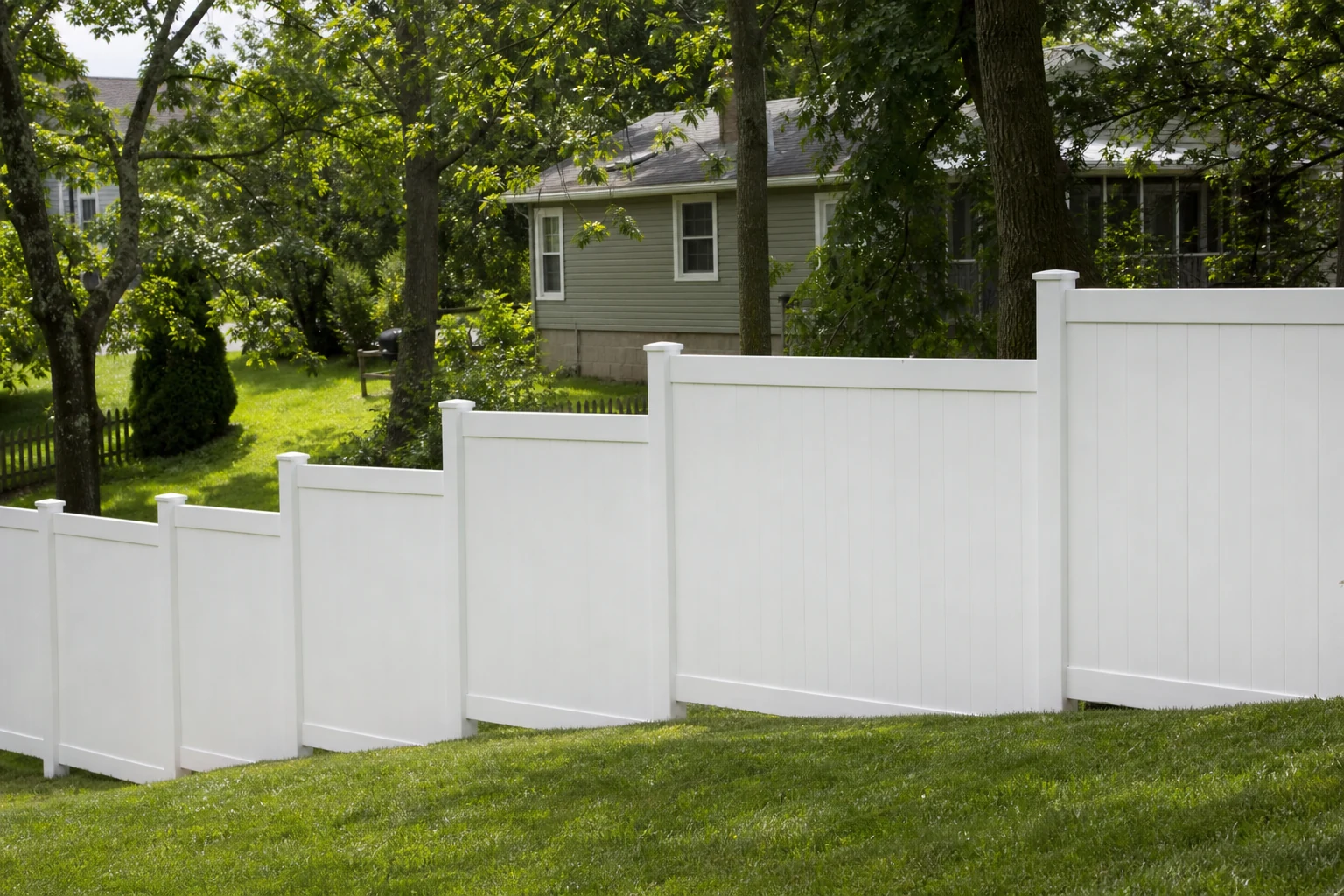
Vinyl picket
Open picket patterns define a boundary without creating a continuous visual wall.
Accent sections
A focused vinyl section may be considered where a clean screen or coordinated boundary is the main need.
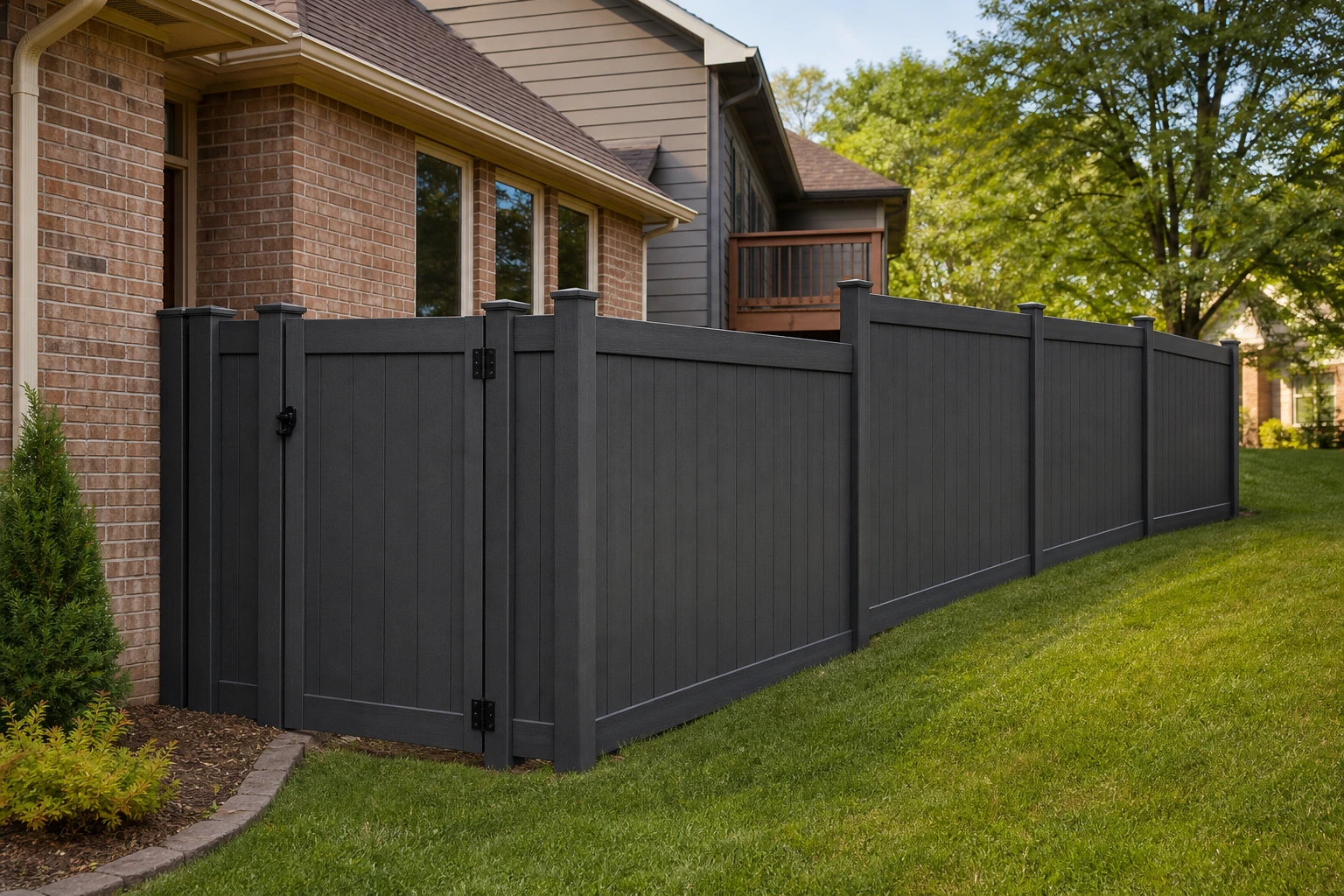
Project detail
Composite fence and gate detail
Notice the clear opening, approach, swing, support, hardware, and nearby transitions that shape how the opening needs to work.
A clear path
From request to a defined vinyl fence installation scope
The same four-step rhythm keeps project details, site context, decisions, and next actions easy to follow.
Share the location
Send the property address, contact details, desired outcome, approximate dimensions, and the photos that explain the route or work area.
Show the conditions
Document grade, access, existing materials, structures, hardscape, vegetation, drainage, utilities, and every gate or transition.
Compare the scope
Review the vinyl fence installation direction, exclusions, owner responsibilities, material choices, and any information still needed.
Confirm next steps
Use the written conversation to confirm what is being considered before treating layout, material, preparation, or approvals as settled.
Prepare a useful request
Measure broadly, photograph clearly, and label uncertainty
Include these project details
A rough sketch and overlapping photos usually explain more than one close-up image.
- Provide any preferred profile, color, or product reference
- Measure runs and show corners, short returns, and termination points
- Photograph slopes from both directions along the proposed line
- List every gate opening and what must pass through it
Confirm the site context
Keep measurements, photos, access, and responsibilities clear before the scope is finalized.
- Label preliminary measurements as approximate and identify any uncertain endpoints
- Show corners, openings, grade changes, adjoining work, and the full access route
- Photograph transitions and constraints from more than one useful angle
- Confirm property-line, utility, HOA, permit, and code responsibilities separately
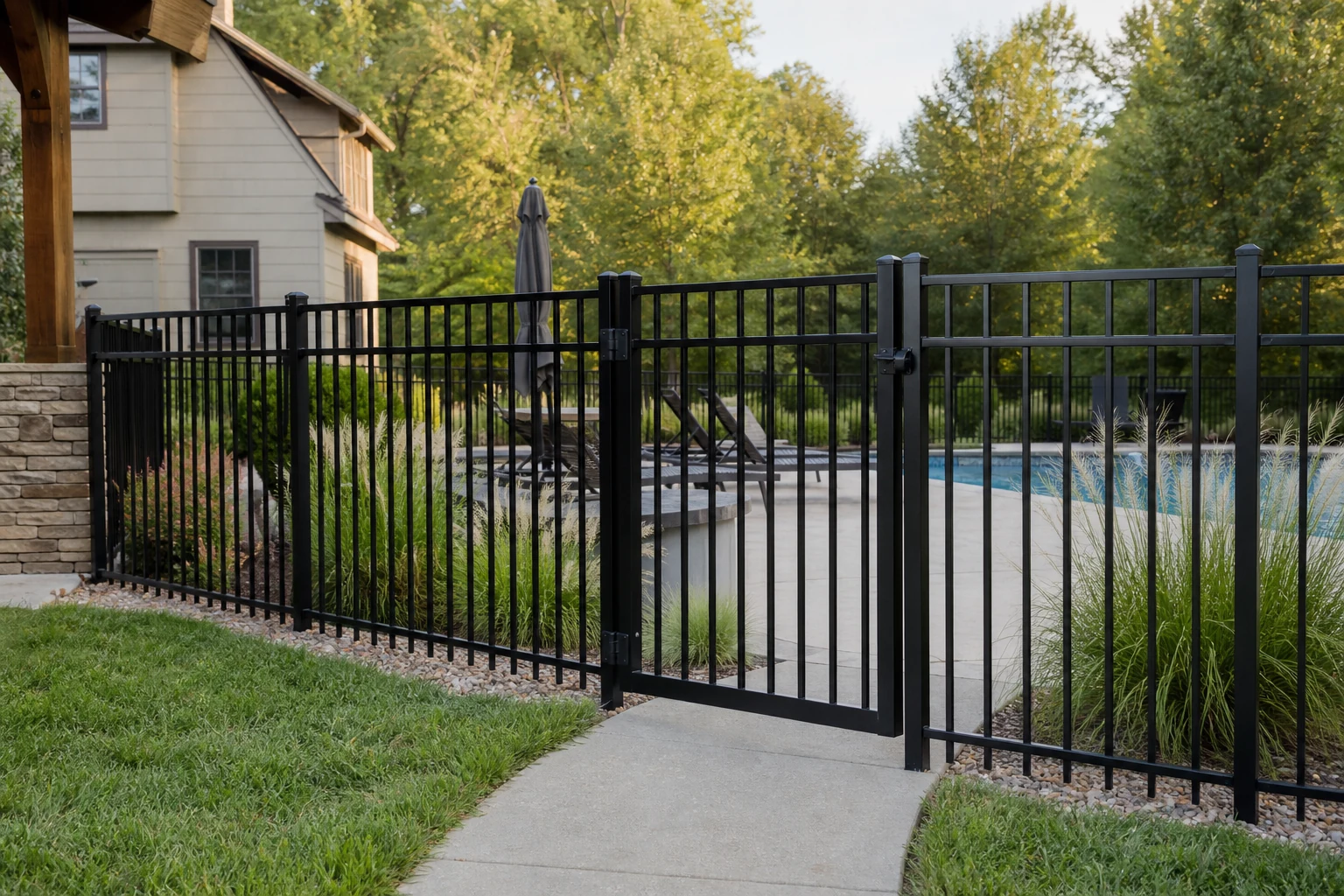
Common questions
Vinyl Fence Installation FAQ
These answers frame the first conversation. Site conditions and the requested scope still control the project details.
Can vinyl fencing handle a sloped yard?
Many systems can transition across grade, but the visual result and panel approach vary. Clear grade photos are important before choosing a profile.
Are all vinyl fence panels the same size?
No. Dimensions, construction, rails, posts, and compatible gates vary by system, which is why a product reference can be useful.
Can vinyl meet an existing fence?
It may be possible to plan a transition, but the materials, heights, post locations, and ownership of the existing line need to be clear.
What should I know about color?
Color options vary by system and can look different in direct sun and shade. Identify the desired direction and any matching concern.
Is vinyl automatically maintenance-free?
No exterior material is literally maintenance-free. Cleaning, impacts, movement, vegetation, and component availability still deserve consideration.
Get your free estimate
Send the details that shape the work.
For vinyl fence installation, send the property location, intended result, approximate dimensions, material direction, gates or openings, existing conditions, access constraints, and clear photos. Do not wait for perfect drawings; label rough information honestly so the first review starts from useful facts.
Request a KY Fencing Works estimate
Share the property location, the work you need, useful dimensions, access notes, and any helpful photos.